A delegation of Ethiopian exporters led by the Ethiopian Horticultural Producers and Exporters Association visited Fruit Attraction for the first time. Tewodros Zewdie, executive director of the association, shares his impressions of this premiere and the prospects for Ethiopia's fruit export industry.
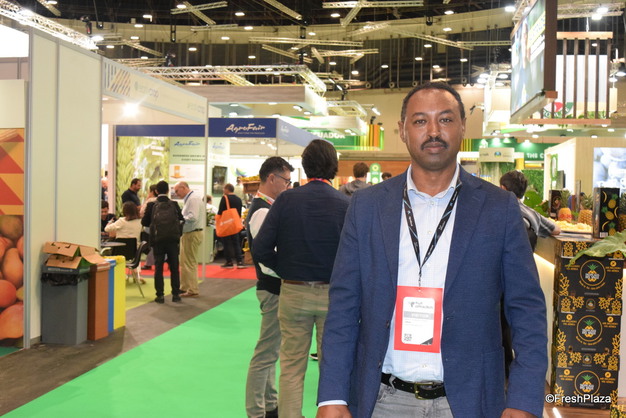 © Youness Bensaid | FreshPlaza.com
The country is virtually absent from the international fruit market, but according to Zewdie, it has considerable potential and decisive competitive advantages. He explains: "Ethiopia has millions of hectares of arable land, enormous water reserves, and a highly diverse climate. Our country has 18 agroecological zones and production areas ranging from 100 meters below sea level to 4,600 meters above sea level. This climatic diversity makes the country suitable for the production of a wide range of fruits, but it also allows for year-round production of several fruits that are in high demand on the international market. It is true that this potential has not yet been fully exploited, but agriculture and horticulture are now strategic sectors for our country. Large-scale fruit planting is currently underway in Ethiopia at a rapid pace."
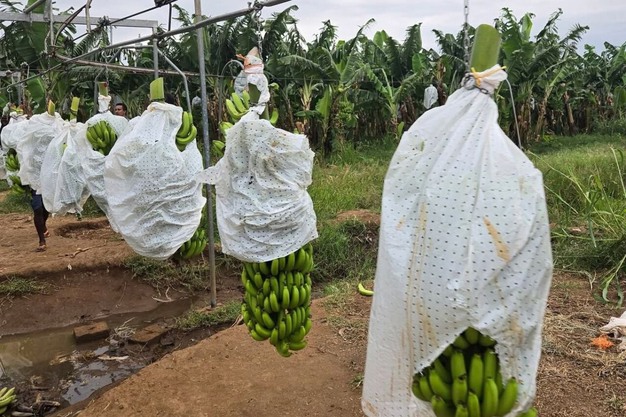 © EHPEA
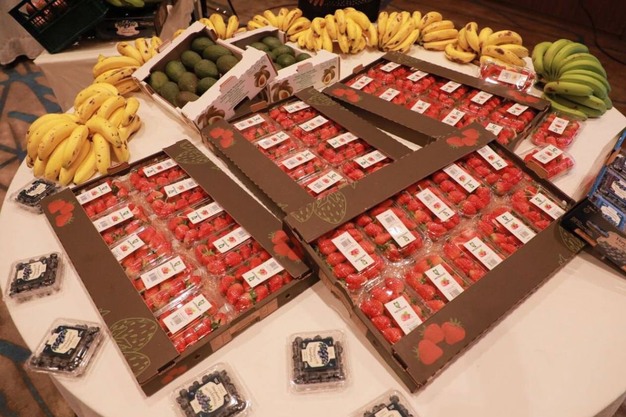
Among the fruits for which Ethiopian origin could become a serious alternative in the medium term, avocados deserve special mention, according to the producers' representative. He adds: "Avocados, particularly the Hass variety, present enormous potential in terms of both production and demand. We have the capacity to produce very large volumes, and a year-round supply is technically possible. Ethiopia is also moving towards planting and exporting other fruits, such as bananas, strawberries, papayas, and blueberries, in addition to aromatic herbs, which are already in commercial production or in the final stages of trials."
 © EHPEA
Surrounded by giants in agricultural production for export, such as Egypt and Kenya, Ethiopia can quickly catch up in the international market, according to Tewedros. He continues: "Ethiopia has decisive competitive advantages. In terms of agronomy, we have the capacity to produce year-round, whereas Egypt, for example, has seasonal production. We also have lower production costs and a skilled workforce available. We are not afraid of competition and can be very competitive in terms of pricing in the higher quality categories."
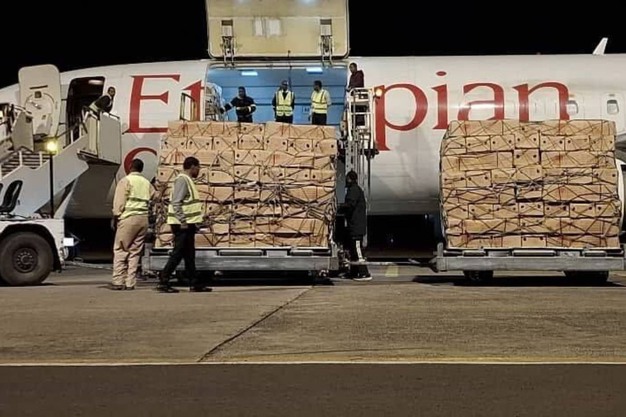
Ethiopia's national ambitions remain hampered by a lack of infrastructure, as Zewdie acknowledges: "There is still work to be done in terms of building warehouses and cold storage facilities, but we don't think this is insurmountable. For example, cold storage has increased dramatically in Ethiopia with the recent development of the pharmaceutical industry, and the same can be replicated in horticulture. For the rest of the supply chain, things are much more adequate. Ethiopia is a landlocked country, but we have quick access to the Red Sea via Djibouti, and the crisis in the region is being resolved. We have seen keen interest from shipping companies in supporting Ethiopian exports by sea and air freight, which is also highly developed, with the Ethiopian national airline serving more than 140 destinations worldwide. Finally, our proximity to the Middle East and to a lesser extent to Europe gives us a considerable edge."
 © EHPEA
The recent launch of the Grand Ethiopian Renaissance Dam (GERD), inaugurated on September 9, is a major step toward modernizing the country's agricultural infrastructure, according to Tewdros. Intended for electrification and rural development rather than irrigation, according to GERD advocates, it is nonetheless important for growing. Tewdros explains: "Irrigation without electrification is a fantasy. Much of the agricultural production is carried out by small farmers in rural areas who need infrastructure development and energy supply, including to run cold storage facilities, hence the importance of the GERD. It will also help us irrigate from other rivers in the country." Egypt's claims over a supposed reduction of its share of Nile waters have been a source of tension with Ethiopia since 2011, which the Ethiopian side refutes on the basis that the GERD is intended for electrification and rural development.
 © EHPEA
The first participation in a major trade show, Fruit Attraction, albeit limited in number, opens up a promising path, according to the exporters' representative. He shares his impressions of the show: "We visited Fruit Attraction with a delegation of six companies representing the most sought-after fruits on the international market. It was an excellent opportunity to explore the market, and we achieved good results in this regard. It was also an opportunity to meet with players in the value chain, from seed suppliers to manufacturers of agricultural machinery and equipment. All participating companies already have commercial-scale production and Global Gap certification, and some of them were able to sign contracts."
"For our part, at EHPEA, we are in step with this national effort by working to create an ecosystem conducive to horticulture, a strategic sector for Ethiopia, by building capacity and helping companies meet the compliance requirements of their markets and obtain certifications, while acting as a liaison between producers, the government, and other stakeholders," Zewdie concludes.
For more information:
Tewodros Zewdie
EHPEA
Tel: +251911255673
Email: [email protected]
www.ehpea.org