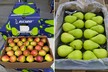
This past British Columbia (B.C.) cherry season met and exceeded all expectations in terms of crop load. "It was the biggest season ever for B.C., but also for our company," says Richard Isaacs with Global Fruit. The team sold and shipped more than 19 million pounds of cherries and the group's growers were very happy they got to harvest a full crop after many difficult years. The team is now looking forward to the southern hemisphere season.
Outlook for early season
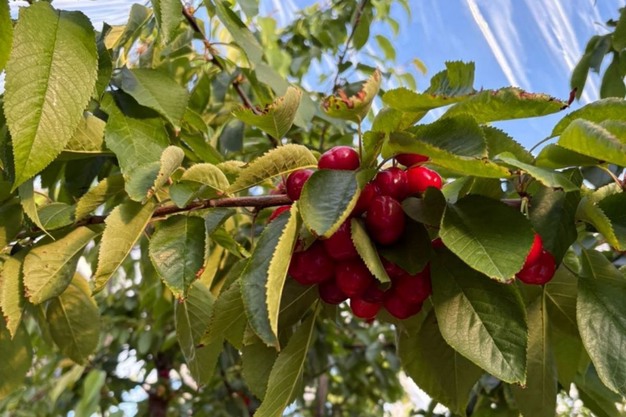
While it is still early to give an accurate forecast for Chile, the earliest orchards seem to have a smaller crop compared to last year's record season. "Some areas suffered frost during blossom, and some possibly had a lack of winter chill hours, but the net effect is the same with less cherries per tree in those early orchards" commented Isaacs. The trees produced plenty of flowers, but the fruit set of the early varieties and early locations just isn't great. On a positive note, these very early orchards are only a small portion of Chile's total cherry volume, therefore reducing the impact. "These are the very first cherries of the season, picking from mid-October until mid-November, but for the main crop that makes up 90 percent of the total volume we are anticipating a more normal fruit set. Those regions are just finishing blossom, and our team on the ground is assessing the situation now."
 © GLOBAL FRUIT
Early cherries grown under covers.
High quality cherries for other markets
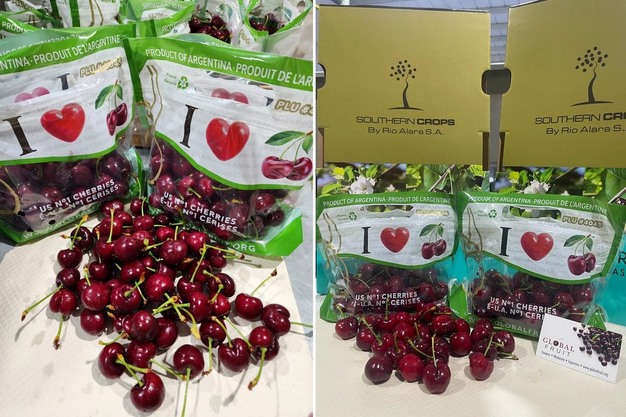
Chile ships the large majority of its cherries to China and historically, more than 90 percent of volume has ended up in the Chinese market. However, after last year's record export number of 125 million boxes and the challenges that came with shipments to China, Chilean growers and exporters are keen to diversify into other markets. "Chilean exporters want to become less dependent on China and at Global Fruit, we have the expertise to support them," said Isaacs. However, to develop a new market and be successful, it is crucial to pack high quality product. "Consumers in North America and other markets around the world know what a good cherry tastes like because they see them from April until September, so we need to maintain that standard when we source cherries from the southern hemisphere." Another reason quality has to be top notch is that many people just aren't used to eating cherries in winter. "Building the habit of consuming cherries between October and March takes time, and only high-quality product will drive repeat purchases and move the category forward."
 © GLOBAL FRUIT
Save on transportation time
Global Fruit has a team on the ground in Chile, shipping cherries to customers around the globe, including North America, Europe, the Middle East, and Asia. "Our distribution model is what sets us apart as the transportation time of our cherries is as short as possible," Isaacs shared. Cherries that are shipped by air from Chile to the U.S. for example make their way directly to the retailer's distribution center from the airport. Additional storage is being cut out of the chain to save time on transportation and bring the freshest possible cherries into stores. The company is experiencing strong interest from growers and packers who are ready to send some of their best fruit to markets outside China.
Argentina
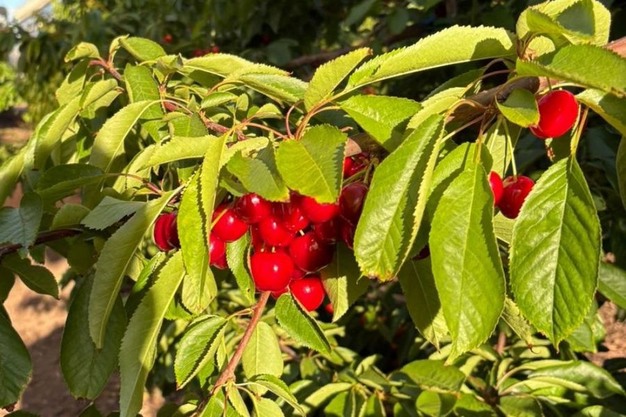
In addition to Chile, Global Fruit also works with a number of growers and packers in Argentina. The early season kicks off in Mendoza where air shipments are anticipated to start early November. The season continues through December as the harvest moves into the Rio Negro valley, and Global Fruit's season ends with cherries grown in Los Antiguos. "These are the latest cherries of the southern hemisphere season and shipments start after Christmas, continuing into February with arrivals into March."
Looking forward to meeting up in person? Isaacs will be attending IFPA's Global Show in Anaheim on October 17 and 18.
 © GLOBAL FRUIT
 For more information:
Richard Isaacs
Global Fruit
Tel: (+1) 250-428-2320
[email protected]
www.globalfruit.org