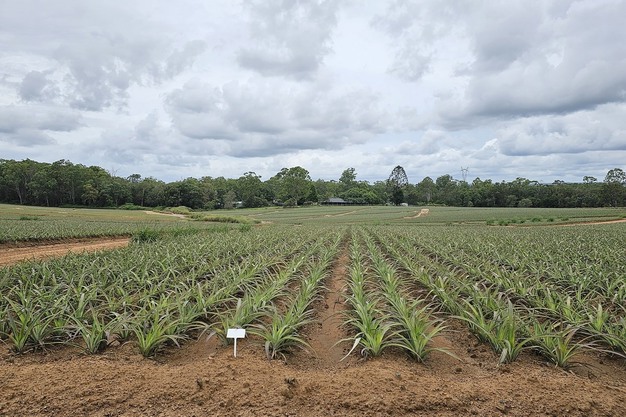
South-east Queensland pineapple growers have shared preliminary trial results of the new generation fertiliser Lono at the annual Pineapple Field Days on the Sunshine Coast.
ProdOz International crop science technologist Zen Kynigos, who introduced the Levity Crop Science fertiliser to local growers, presented preliminary findings of commercial nitrogen and root development trials conducted since 2023. The fertiliser, developed by Dr David Marks of Levity Crop Science, uses LimiN chemistry to hold nitrogen in the amine form, aimed at improving photosynthesis, root growth, and yield.
 © Prodoz
Queensland Fruit and Vegetable Growers (QFVG) began working with pineapple growers in 2022 to address the impact of nitrogen loss into local waterways. "Our objective was to evaluate alternative nitrogen-based products versus standard practice products with a view to replacing or reducing them. Lono was one of the products we chose to evaluate," said QFVG South-East Queensland Water Quality Program project manager Tim Wolens.
According to Wolens, growers used less nitrogen per hectare in Lono trials compared to standard practices, with equivalent or better crop results and similar costs. He noted improved root systems and more uniform plant growth, while explaining that amine-based fertilisers release nitrogen more consistently than ammonia and nitrate-based products, reducing losses from leaching.
The Department of Primary Industries (DPI) supported a pilot study on Lono to measure nitrogen loss. DPI senior research agronomist Stuart Irvine-Brown said: "From our preliminary perspective in comparing results, there was a staggering difference in the ability of Lono to be held in the soil and available uptake after 900mm of rain, while most of the conventional nitrogen fertiliser applied to the soil was lost."
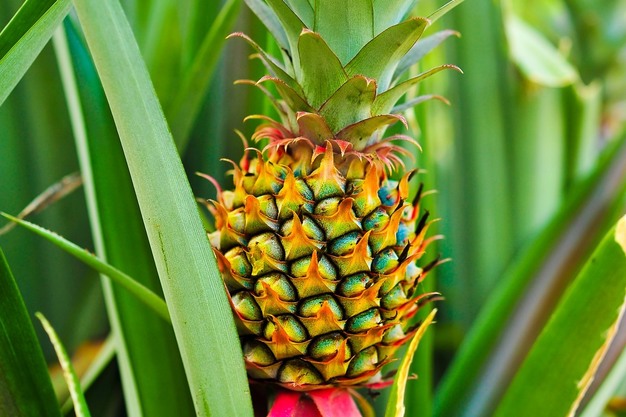
Growers also reported results from on-farm trials. At Sandy Creek Pineapple Company, Glasshouse Mountains, Sam Pike trialed Lono on Aus Carnival and 73-50 varieties. "We harvested our first Lono crop in early 2025 (replacing 45 per cent urea over 1.5 hectares) and found no difference in yield. That it has minimum nitrogen loss is a bonus. Dollar for dollar, it's the same as what we were using," Pike said.
 © Prodoz
At Piñata Farms, Wamuran, pre- and post-plant trials reduced ammonium sulphate and urea inputs by 50 percent. Farm manager Tony French reported similar plant health in pre-plant trials, while post-plant trials showed smaller plants with less green colour, though nitrogen remained in the soil during a wet season. Yield results will be assessed after harvest in spring 2025.
At Polsoni Pines, Wamuran, grower Joe Polsoni said Lono trials showed immediate differences in plant health and reduced nitrogen leaching. "We initially trialed Lono over the first 10 hectares, conducted control testing of it and other applications, and immediately had the best results with Lono, which gave us confidence to replace other standard nitrogen products in the program and run the trial to 25 hectares," he said.
 © ProdozFor more information:
PRODOZ International
Tel: +61 3 8401 5047
Email: [email protected]
www.prodoz.com.au