As the Tunisian date season approaches with significant volumes compared to last season, exporters continue to face difficulties in supplying the Asian market. The issue is no longer related to insufficient volumes but to the crisis in the Red Sea, which is lengthening transit times to the point that delivering on time for Ramadan requires extensive planning and anticipation of demand.
Nasri Abdelhamid, CEO of Afrimex and Tunisian date exporter, emphasizes the importance of the Asian market. He says, "This market is vast and growing rapidly. On the one hand, there are the countries of Southeast Asia and South Asia, with large Muslim populations, such as Indonesia, Malaysia, Bangladesh, and India, which experience a seasonal peak during Ramadan. On the other hand, we are also seeing demand increase off-season in countries that are not predominantly Muslim, driven by trends towards "better-for-you, natural snacking, and e-commerce, which is particularly the case in China. Analysts also consider the Asia-Pacific to be one of the most dynamic regions for date imports."
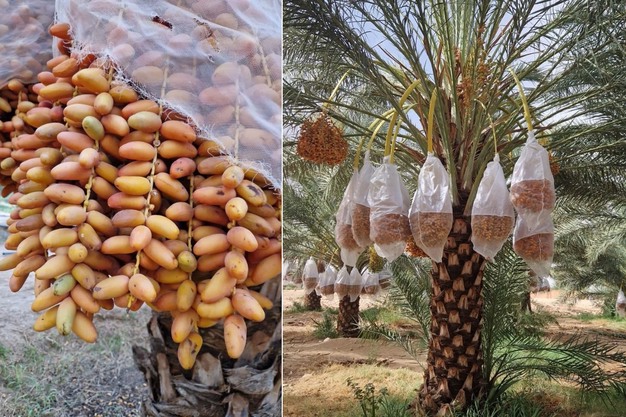 © Afrimex
Demand for dates in Asia, in terms of varieties, is diverse and shapes the competition, offering great opportunities for Tunisia. Nasri adds: "If we take the Chinese market as an example, it remains a niche market, but it is growing rapidly with imports coming mainly from Saudi Arabia, Iran, and the United Arab Emirates, a sign of growing curiosity beyond local Muslim communities. All varieties are in demand, including Tunisia's flagship varieties such as Deglet Nour, Alig, Khuat Alig, as well as Medjoul dates and varieties from Saudi Arabia and elsewhere."
In the upcoming season, Tunisian growers are recovering after a catastrophic year in which weather conditions caused the loss of half of the national date production, limiting exports to Asia. However, beyond volumes, trade with Asia is also affected by the Red Sea crisis. Nasri explains, "Exports were impacted not only by the reduced quantities of the 2024 harvest but also by the rerouting of ships via Cape Town due to the problems in the Red Sea. Considering that Ramadan moves earlier each year on the Gregorian calendar, it is becoming increasingly difficult to meet the needs of the Asian market in terms of volume and timing, especially given an average shipping time of 60 to 70 days."
"It is therefore essential to anticipate the needs of the Asian market ahead of Ramadan and start exporting immediately after the 2025 harvest. For the following season, it will even be necessary to plan and carry out exports before the new harvest, using stocks from the 2025 harvest, in order to ensure the dates arrive before Ramadan 2027. From now on, it will no longer be possible to export freshly harvested dates to Asia in time for Ramadan," Nasri adds.
[Editor's Note: Ramadan is a month in the Islamic lunar calendar where a year runs only 354-355 days, creating a shift of 10-11 days earlier each year on the Gregorian solar calendar. For example, if the beginning of Ramadan coincides with early January this year, the next time this coincidence will occur is in 30-33 years. This shift impacts the trade of fresh products due to their seasonality. During the month of Ramadan, there is a high consumption of dates in predominantly Muslim countries.]
Nasri concludes, "Planning is therefore essential for the date trade to Asia, especially since the crisis in the Red Sea adds an extra layer of complexity. We will meet with buyers at the Asia Fruit Logistica in Hong Kong next week for this reason to discuss their needs, and we welcome visitors to our stand 5-5A05."
For more information:
Nasri Abdelhamid
Afrimex
Tel: +216 96 615 510
Email: [email protected]
www.afrimex.net