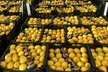
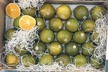
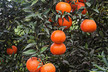
Argentina's citrus industry is facing a new challenge in the European market after several shipments of oranges were rejected due to the alleged detection of black spot, considered a quarantine pest in the EU.
Producers and exporters warned that, in some cases, the consignments were destroyed, re-exported, or returned without traces of the disease being found. The total number of rejections has not been disclosed, but the sector fears that a para-tariff barrier is being set up.
Black spot, caused by the fungus Phyllosticta citricarpa, can appear on oranges and lemons. Faced with this situation, companies and the National Agri-Food Health and Quality Service (Senasa) have increased controls, especially on shipments destined for Spain, Portugal, and Italy, where most of the interceptions take place.
"It is a very small fungus that does not affect the fruit or the plant. South Africa has the same problem. Spain uses it to regulate the supply of lemons from the European Union in the off-season," stated José Carbonell, president of the Argentinean Citrus Federation (Federcitrus).
European regulations also cover canker disease, caused by the bacterium Xanthomonas citri pv. citri, which requires strict phytosanitary control. According to Carbonell, this disease "cannot be detected when the fruit leaves the packing house" and its subsequent development "complicates the whole export process".
The most significant precedent was recorded in 2020, when the EU temporarily halted the entry of Argentine citrus after an increase in black spot interceptions. "At that time, there was no supporting PCR. Samples were taken. They were analyzed, and more than half of them were free of fungus," Carbonell recalled.
NOA, the main citrus exporting region with Tucumán, Salta, and Jujuy at the forefront, has already recorded detections in lemons, which conditions the rest of the shipments. "If they detect anything, they won't let the cargo in. They destroy it. South Africa sends substantially larger quantities than us. Furthermore, the EU is currently involved in a WTO dispute with South Africa over this issue," stated Roberto Varela, manager of the Chamber of Citrus Exporters of Northeast Argentina (Cecnea).
Countries like England, Belgium, and the Netherlands have no major restrictions against the black spot because it is a superficial fungus that does not affect human consumption, but EU regulation is unique and must be followed by all member states, the exporters stated.
Weather conditions and cultivation practices also play a role in the spread of the disease. For example, the installation of wind-breaking rows of trees may have created a microclimate where the fungus thrives.
"They just say: 'We found it.' But they don't have to show proof. We don't deny that the disease exists, but even if an infection slips through, the chance of finding it is very low. Nevertheless, they have the right to refuse the shipment, and that immediately causes major problems," Carbonell stated.
Source: lanacion.com.ar