A heatwave that swept across Morocco at the end of June severely impacted avocado crops, halving the expected volume for the upcoming season and inevitably leading to price hikes.
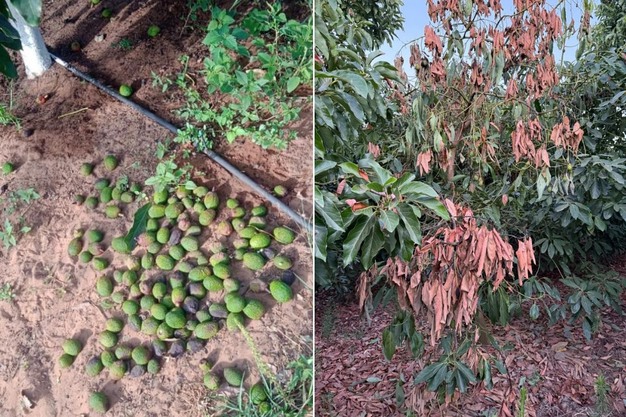
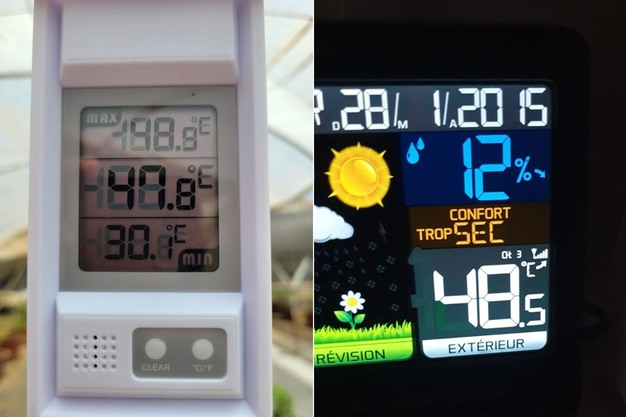
Abdelkrim Allaoui, president of the Association of Avocado Growers in the Gharb region, reports on the situation: "Our region, which is home to most of the country's avocado orchards, experienced an intense heatwave lasting three consecutive days from 28 to 30 June. Temperatures reached 40°C in Kenitra and 49°C in Moulay Bousselhem, an important production area. The trees simply couldn't withstand the heat and dropped a lot of fruit."
 © Abdelkrim Allaoui
The heatwave at the end of June was not the only climatic event to affect the avocado industry this season. The growers' representative said: "Adverse weather conditions struck in March already, with excessively cold temperatures and torrential rain causing problems during flowering. More heatwaves are anticipated, including one today." The season is therefore uncertain, as October is also a critical period, with storms and strong winds likely along Morocco's northern Atlantic coast, the main area for avocado cultivation.
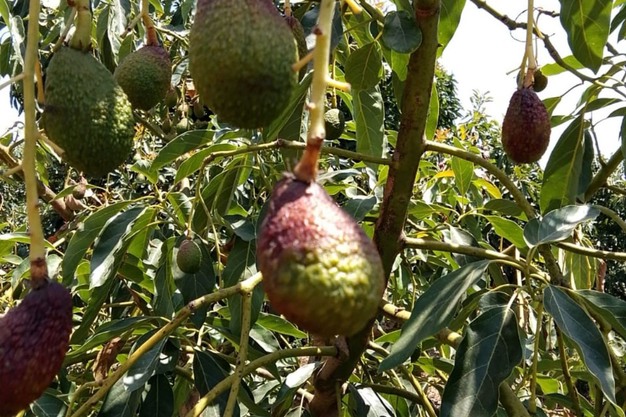
Reported damage varies from one grower to another, but, according to Allaoui, losses at the national level are significantly high, representing half of the season's volumes. He adds: "We estimate that volume losses for the 2025/26 season will be no less than 40%, potentially reaching 50% of the season's volumes lost between March and August. The damage is less severe among growers who protected their orchards, and vice versa. We have therefore revised our forecast for the upcoming season's volumes down to 80,000 tons, from initial estimates of 140,000-160,000 tons, a figure that could still change."
 © Abdelkrim Allaoui
This drastic drop in expected volumes will force growers to intensify their farming operations, particularly irrigation and tree nutrition, since, according to the growers' representative, the only way to mitigate losses is to seek out large fruit sizes.
Price hikes are certain to follow this new situation. Allaoui explains, "Prices are already rising, months before the harvest, and have reached 23 dirhams per kilo for fruit still on the trees. We believe that the season will start with a minimum price of 30 dirhams, compared to 17 dirhams at the start of last season. It should be noted that last season's prices were pushed down due to overproduction. In any case, under the current conditions, there will be no harvest until prices are satisfactory for growers."
Therefore, it is highly likely that the next harvest peak will take place later than usual while growers wait for high prices. The harvest of green-skinned varieties typically begins in October, followed by Hass avocados in November. "Next season, growers will wait until the end of January, or even March if necessary, to harvest the bulk of Hass avocados, when prices on international markets are at their highest," Allaoui adds.
 © Abdelkrim Allaoui
Another consequence to anticipate at the commercial level, relating mainly to the relationship between growers and exporters, involves the mode of sale. Typically, fruit is sold on the tree or at the farm gate either per kilo or at a flat rate per plot. According to Allaoui, the upcoming season will only see sales per kilo. He concludes: "Growers will have to make significant agronomic efforts to care for their trees and obtain large fruit sizes in order to save the season. This will inevitably impact costs, prices, and sales methods. Buyers are aware of this, and we have seen many European importers come to the region in recent days in a race against time to secure their supply."
For more information:
Abdelkrim Allaoui
Association of avocado growers in the Gharb
Tel: +212 672-077375
Email: [email protected]