Botswana is a country, located in central Southern Africa. It has a proud longstanding history in Agriculture, but more focused in the beef industry and to an extent grains and maize production. Production of fruit is very limited , mostly restricted to the Tule area in South Eastern Botswana.
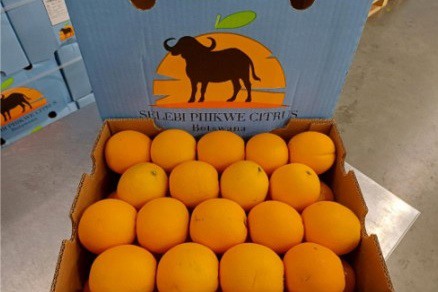
In 2018, Pieter Scholtz and Deon van der Westhuizen started looking at opportunities to develop a citrus industry in Botswana. This was after a prominent Botswana businessman, Ram Ottapathu, enquired about citrus cultivation in Botswana. After careful investigation, they decided to develop the first citrus farm close to Selebi-Phikwe in the Central District of Botswana. The main drivers for the decision were the altitude and latitude of the farm and the relatively dry climate of the Selebi Phikwe area. Other big advantages of the location of the project are that it is totally isolated from other citrus and that there are few traditional citrus pests in the area. The area was declared a Citrus Blackspot-free area.
 © Selebi
"A big mining operation had recently closed down in the region, leaving over 4000 people unemployed, so in 2019 we developed a business plan and took our proposals to the Botswana Government," said Pieter Scholtz, CEO and main investor of Selebi Phikwe Citrus. "The total property size is 1700 hectares, on which we plan to develop 1300 hectares of orchards. The initial phase of citrus development, covering almost 1000 hectares, began in December 2020 and was completed in 2023. Since then, we have continued with development and plan to finish the second phase in 2027/28."
"This project is important to the Botswana Government because of job creation, foreign currency generation, citrus import substitution, independence from citrus imports, and will support the diversification of the Botswana economy, an important strategic objective of the Botswana Government.
 © Selebi
Critically, it also demonstrates that large-scale horticulture is possible in Botswana and that a whole new industry can develop, changing the lives of many Batswana, " said Deon van der Westhuizen, Chairman of the Selebi Phikwe Citrus Board.
Selebi Phikwe Citrus will become one of the largest consolidated citrus developments in Southern Africa. It aims to employ 1,500 people, permanent and seasonal, and will produce a variety of citrus, including mandarins, Valencias, lemons, grapefruit, and navels. Water rights have been secured from the Letsibogo Dam.
 © Selebi
"Botswana has never had a citrus export trade; we have created an industry. We have had to develop market access to export the citrus, an ongoing process. The project is doing well; it had its first harvest in 2024. With a second harvest of 22,000 tons expected for 2025, well on its way to producing 80,000 tons of fruit when the project is mature.
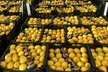
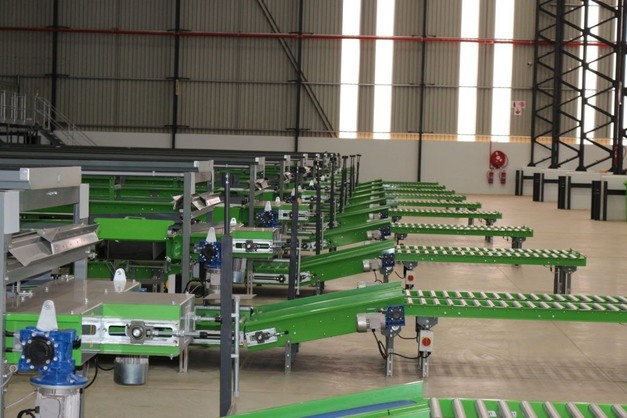
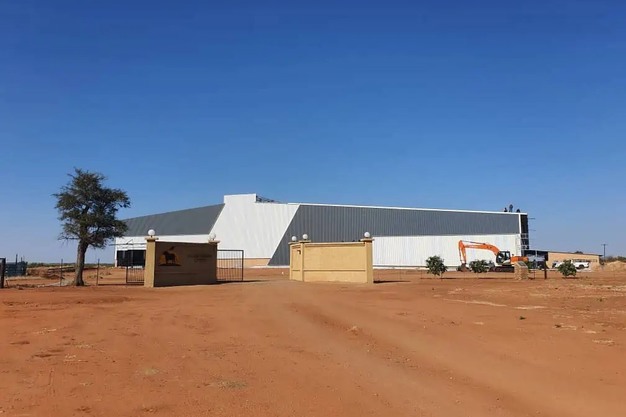
"Because of the size of the project and the absence of other commercial citrus packhouses in Botswana, we had to build our own packhouse. Planning started in 2022, and Selebi Phikwe Packers commenced operations in January 2024. We installed an eight-lane MafRoda sizer system in a 12,000 square meter building, enabling us to pack 45,000 tonnes of citrus. Phase two is planned to start up at the end of 2026 with the installation of another ten-lane sizer, and the expansion of the building and offloading areas by another 8,000 square meters."
 © Selebi
Competitiveness with other producers
The Botswana harvest for most of the mandarin and sweet citrus varieties is earlier than the traditional Limpopo citrus-producing areas. "The distance to market adds some cost, but generally, inbound logistics cost is in line with South Africa," said Scholtz. "We have market access to the United States, Korea, and India are at an advanced stage, and China is in process."
The duties for Botswana are similar to those of South Africa, Namibia, etc. Botswana is a member of SACU, and tariffs applicable are also applicable to Botswana.
For more information:
Pieter Scholtz
Selebi Phikwe Citrus
[email protected]
sphikwecitrus.com