Nationwide heavy rains have triggered crop harvest emergencies across South Korea, with supply shortages expected to drive up food prices. Regions such as Geumsan in Chungcheongnam-do, Goheung in Jeollanam-do, and Yeongyang in Gyeongsangbuk-do are already seeing price fluctuations in summer vegetables and fruits due to flooding and heatwave damage.
According to the Ministry of Agriculture, Food and Rural Affairs, preliminary data show that 28,491 hectares of crops, primarily rice, beans, and various fruits, have been submerged since July 16. Chungcheongnam-do alone accounts for 16,710 hectares, more than half the total national damage. Other heavily affected provinces include Jeollanam-do and Gyeongsangnam-do. Major pepper-producing areas are experiencing severe bending and flooding issues, while crops like radishes and potatoes are rotting under mud.
Market prices are reacting quickly. The Korea Agro-Fisheries & Food Trade Corporation reports that watermelon prices have climbed 44.6% year-on-year to 30,866 won, while chamoe prices are up 20%. Cabbage, lettuce, and cucumbers have also seen significant price hikes, with cucumbers showing a sharp month-on-month increase.
To counteract these impacts, the government is injecting 35 billion won ($25.2 million) to stabilize food prices. This will support up to 40% discounts until early next month, with supermarkets cooperating on aligned pricing campaigns. Minister of Economy and Finance Ku Yun-chul emphasized the urgency of this issue, stating, "Stabilizing prices is our most critical short-term task."
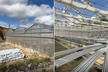
Further south, Sancheong-gun in Gyeongsangnam-do has also suffered extensive agricultural losses from torrential rain and landslides. As of July 21, approximately 1,222 hectares of crops have been flooded, with total damages estimated at 59.4 billion won. Rice fields were the most affected at 1,000 hectares, followed by high-income crops like strawberries (71.4ha), beans (90ha), peppers (25.5ha), and tomatoes (10ha). Facility farming was hit particularly hard, with 125 hectares of greenhouses submerged.
Emergency restoration efforts in Sancheong-gun are ongoing, with 1,260 personnel and 180 pieces of equipment deployed. Of the 73 damaged public facilities, 37 have undergone emergency repairs. However, heavy rainfall also caused additional setbacks, including widespread power outages and damage to horticultural facilities, 89 hectares of which were flooded.
While the government aims to restore operations and curb price volatility, concerns remain over short-term inflation pressures. As demand shifts and supply narrows, continued monitoring and rapid response will be critical to maintaining food system stability.
Source 1: ChosunBiz
Source 2: Maeil Business