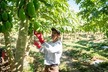
The Uttar Pradesh government's initiatives are steering farmers in Prayagraj towards dragon fruit cultivation, amidst climate alterations and scant rainfall. As traditional irrigation-based farming becomes less viable, some farmers are leaning towards this alternative to sustain their livelihoods.
Chhote Lal Gautam, a farmer from Sarangapur village, transitioned to dragon fruit cultivation due to "weak monsoons" leading to "a constant crisis of irrigation" as he noted a decline in income from conventional crops.
The Uttar Pradesh Agriculture Growth and Rural Enterprise Ecosystem Strengthening Project (UP-AGREES) has shortlisted 18 districts, including Prayagraj, to encourage agricultural diversification. Additionally, the government provides subsidies and assistance to farmers to support this shift.
Deputy Director (Horticulture) Krishna Mohan Chaudhary reports, "Currently, 16 progressive farmers are cultivating dragon fruit in Kaushambi and Prayagraj districts. Prayagraj division has the highest number of farmers cultivating dragon fruits."
Ravindra Pandey pioneered this trend in 2016 in Kaushambi, initiating dragon fruit nurseries which are now distributed to other regions in the state. This transition from traditional to dragon fruit farming is not only an adaptation to environmental conditions but also a quest for higher income.
Financial support includes a 40% subsidy and an additional state grant of Rs 30,000 per hectare, making it a viable option to switch from traditional crops. The grower CL Gautam confirmed receiving substantial financial assistance, which "has increased the interest of farmers in dragon fruit farming."
Dragon fruit, originating from Mexico and introduced to India through various channels, is positioned both as a commercial and health-beneficial crop due to its nutritional profile.
Source: Times of India