Although small quantities of extra-early fruit have already started to be harvested in the Spanish Region of Murcia, no significant quantities are expected until early May, as the cooler-than-usual maximum temperatures are delaying the ripening of the early fruit by 8 to 10 days.
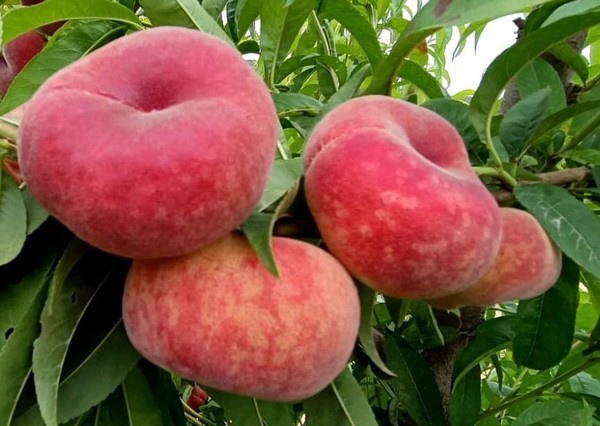 © PSB Producción Vegetal
Bora Bora (DN334-4), a new Paraguayo peach variety, is the earliest on the market
"We'll soon be starting with the variety presentations in our farms in Sierra Espuña, in the Region of Murcia," says Thomas Chevaillier, technical and sales director of PSB Producción Vegetal, a company that breeds stone fruit and cherry varieties.
"The weather conditions this winter and spring have caused a delay of 8-10 days in the ripening of the early varieties. In general, we've had low to medium temperatures, apart from a couple of weeks with high temperatures in late January and early February. For the next two weeks, temperatures are expected to fall below average compared to the last few years, with 20-22°C maximum and no rain, when normally at this time we get 26-27°C," says Thomas.
 © PSB Producción Vegetal
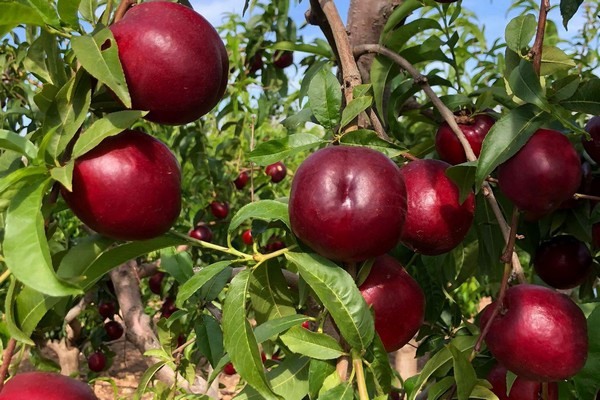
Yellow-fleshed nectarine variety Nerolis (TN272-23), which is harvested a week earlier than the Copacabana.
"Moreover, we had a dry winter until February, but then we've had more than 250 mm of rain in March alone," he says.
The flowering started late for the varieties with very low chilling requirements (<100 HF). For the low requirement varieties (100-300 HF), the flowering started at a normal date, while for the medium-high requirement varieties, the flowering has been delayed.
 © PSB Producción Vegetal
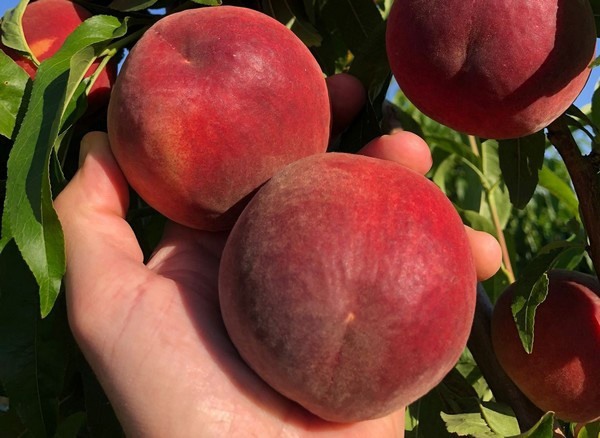
New early white-fleshed early peach Madras (BN313-15).
"We've had better cold this winter than last year, but still not enough for some species, such as apricot and cherry trees," says Thomas.
"About 10 to 15 years ago, the cold was more consistent in winter, and apricot trees had better blossoms, but in recent years, there have been very uneven blossoms, which is why fewer and fewer growers are willing to invest in early apricot. It seems that we are in the prelude to climate change, and few varieties are adapting, not only in Spain, but also in other producing countries."
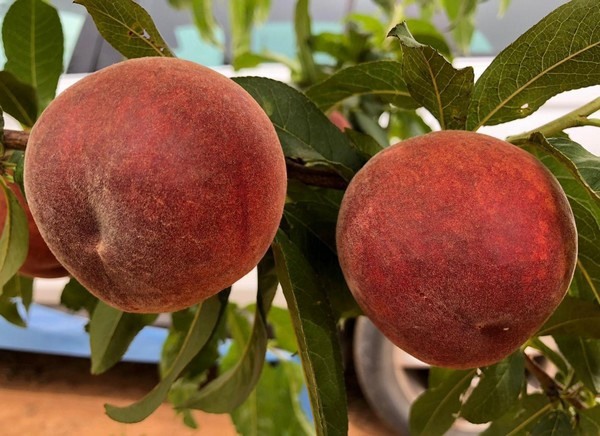 © PSB Producción VegetalYellow-fleshed peach Kitty (BN600-1).
PSB's open days will start on April 28 and growers and anyone involved in the sector is invited to attend to learn more about its range of stone fruit and cherry varieties, which features some new additions, such as the early, sweet yellow-fleshed nectarine Nerolis (TN272-23), the early white-fleshed white peach Madras (BN313-15), the yellow peach Kitty, which is harvested a week after the Astoria, and, above all, the new Paraguayo peach Bora Bora, which after three years of work could become the earliest on the market, arriving a week before the already consolidated Zodiac.
 © PSB Producción VegetalFor more information:
Thomas Chevaillier
PSB Producción Vegetal
Technical Sales Manager
Tel.: +34 620 810 125
[email protected]
www.psbproduccionvegetal.com