In Southern European countries, February usually means falling tomato prices due to increased volumes from the competition. This year again, everything is different in the tomato market.
Many Northwestern European tomato growers are struggling with high energy prices, and sometimes also with the Tomato Brown Rugose Fruit Virus (ToBRFV). So, prices have not dropped in many countries, but are on the rise instead. Spain and the Netherlands even recorded new higher prices, the European Commission's latest tomato update shows.
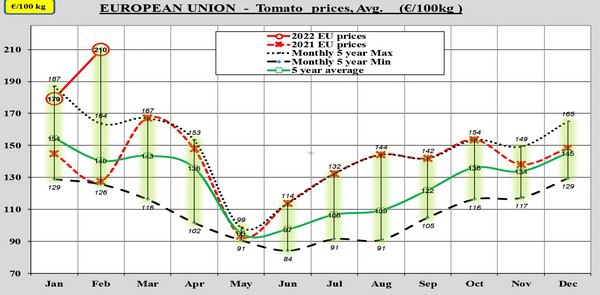
Across the European Union, prices are 50% higher compared to the five-year average. Last month, a kilogram of tomatoes cost roughly €2.10.
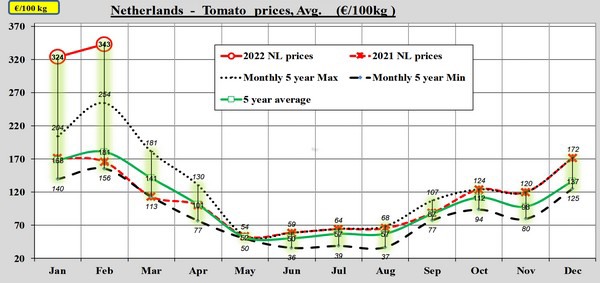
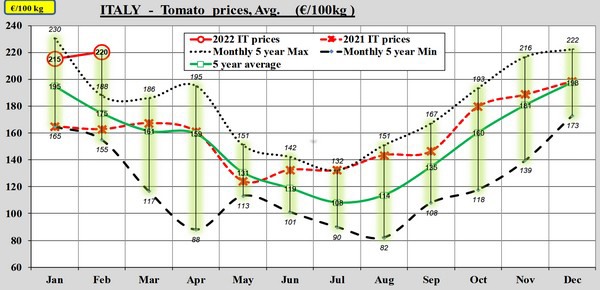
The Italian and Dutch prices per kilo are higher. In Italy, it was €2.20, while the stats show that in the Netherlands, it reached as much as €3.43. This average price/kg is even higher than in 2021, which was already a standard tomato year. These records are not exactly a reason for celebration. Each grower's situation (good or no gas contract, virus or no virus) is vastly different. At the same time, everyone is greatly concerned, now also because of the war in Ukraine.
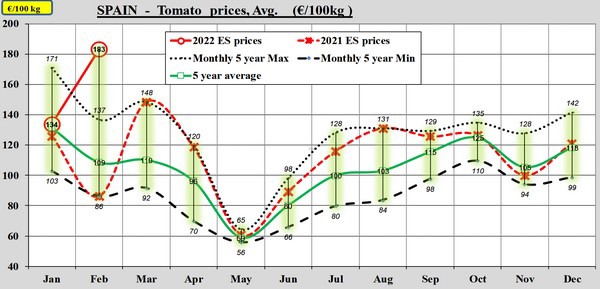
Spain, with a very different price pattern, lags. Its €1.83 average price in February was much higher than usual, yet that average kilo price is below the European average. Still, that price is well above the dashboard's five-year average. Last year's graph shows that Spain achieved its highest price in March.
Belgium is not on the EC's dashboard, but its Horticultural Cooperatives Association (VBT) publishes its own figures. Those show the same extraordinary market situation. Volumes were lower than usual all winter, sometimes even half as much.
A similar image is formed by updates of German wholesale market prices. There too, tomatoes are priced well above previous levels. Also, in week 9, prices were often up from weeks 7 and 8. Relative to 2021, tomatoes cost as much as €1 more. See Germany's Federal Agency for Agriculture and Food figures here.
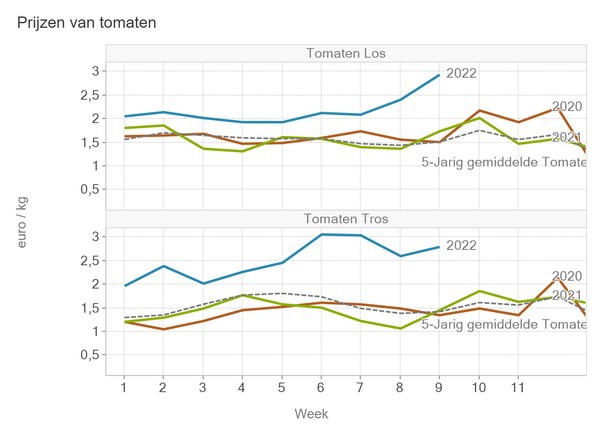
The VBT figures. Click here to enlarge.
Tomato crops usually come into production in Northwest Europe soon. The question is exactly what volumes will be released and how high prices will be. The wildly fluctuating energy prices are constantly changing the situation.
The current high costs, along with, for example, energy and fertilizers prices, mean sales prices will have to be considerably higher to keep tomato crops profitable. How much higher and whether it leads to decreased consumption (apart from the skyrocketing inflation) remains to be seen.