Turkey recently experienced currency fluctuations for several weeks. To halt the lira's ongoing depreciation, the Turkish government had announced a package of measures. But the uncertain climate, also fuelled by an unorthodox monetary policy (interest rate cuts when inflation rises), is causing foreign investors to withdraw their money from the country.
And its residents are trying to convert savings into euros, dollars, or gold. Turkey is very import-dependent, so many products' prices are on the rise. Those are for both industrial and agricultural raw materials, and non-locally manufactured consumer goods. Also, as the currency depreciates, the Turkish government and many companies' debts increase.
President Recep Tayyip Erdogan has used the Islamic aversion to interest to defend his decision to cut these rates. But, more importantly, he says by stimulating investment, the Turkish economy should be transformed into a production economy. Meanwhile, more expensive imports and lower interest rates fuel inflation, which is seriously eroding Turks' purchasing power.
Still, the weak lira (TL) is good for exports, which benefits goods as well as service (read: tourism) exports, and consequently employment. The growth of the export-based economy (Turkey's growth path has been quite positive for the last ten years) provides some room for wage increases to compensate for inflation.
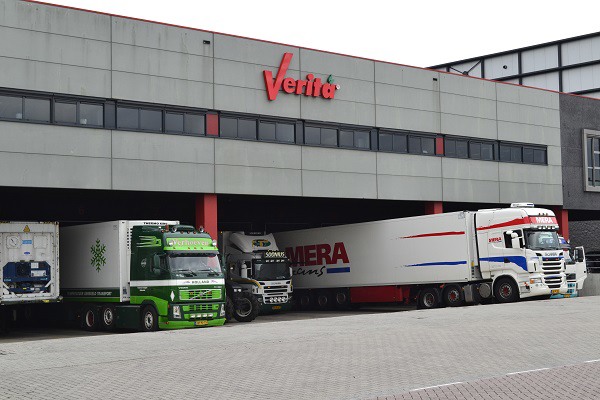
Economic reality is an interplay of many factors that affect each other directly or indirectly. However, there is one aspect that is always essential: stability. After all, this inspires producer, investor, and consumer confidence. And that is exactly what is lacking in the Turkish economy. Muhammet Cakir of Verita Holland is well aware of this.
Ninety percent of this Dutch fruit and vegetable company's trade consists of exporting mainly exotic produce to Turkey. How is this export company, with Turkey as its main destination, holding up in this climate? One in which overseas products are becoming pricier for Turkish citizens by the day.
Fixed vs. fluctuating exchange rate
"The Turkish lira losing value isn't anything new for us. This currency has been fluctuating since 2013," begins Muhammet. "From 2002 to May 2013, the exchange rate was practically fixed. Then it was between TL2.1 and TL2.5 for a euro. It now stands at 15, but a short while ago it dropped as far as 22. That was, however, very unusual - the exchange rate plummeting so far in such a short time."
"This devaluation makes our products more expensive and hinders our exports to Turkey. That's because the products continue to cost the same in the Netherlands in euros. And road transport from the Netherlands to Turkey is paid in euros, with all sea freight in USD, which is converted into Turkish lira. Thus, the price for our exotics has skyrocketed. If the exchange rate starts to play to our disadvantage, we stop for a few days or sometimes weeks."
Volume items vs. special exotics
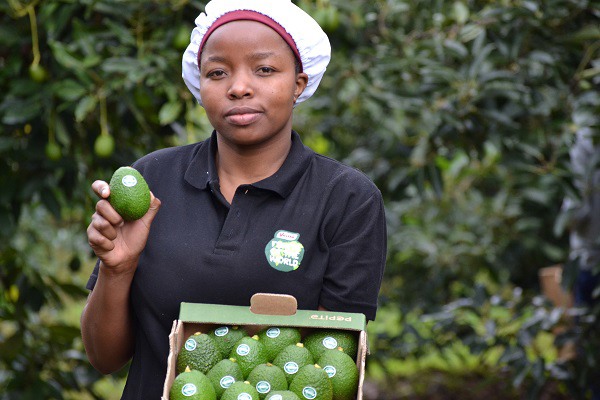
"However, when President Erdogan announced these new measures in late December, and the rate recovered to TL12, our clients didn't immediately start increasing their orders. When the exchange rate fluctuates, up or down, we do less trade each time. It never stops entirely, but you sell less of the real volume items you rely on, like pineapple, grapes, mangos, avocados, limes, pomelos, and ginger," Muhammet says.
"The special exotics such as pitahaya, carambola, and passion fruit, but also berries and asparagus, continue to be shipped in roughly the same volumes. These products are pricier anyway and are generally bought by affluent consumers. Often they're even dollar earners - people who live in Turkey but earn in dollars - who can afford such products. For them, the exchange rate doesn't matter so much."
Local cultivation benefits
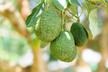
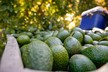
When foreign trade prices increase, domestic production benefits and people revert to buying local goods. And consumption of fruit not grown in the country nosedives. "Turks aren't eating pineapple right now. But they grow avocados locally now; they began five years ago. In the south of Turkey, the climate's good enough for avocados, and there are quite a few plots there. They don't have limes yet," continues Muhammet.
"But you can already find sweet potatoes and also some passion fruit, pitahaya, and a few mangoes. They've started growing those very recently in greenhouses. However, this product cannot yet compete with imports, and most of these products' volumes are generally rather limited. Be that as it may, the situation benefits Turkish exotic growers. Say a box of pitahayas costs around €20 in the Netherlands; that price rises to about €40 when it reaches Turkey."
"That's after adding 50% import duties, transport costs, and profit. When the exchange rate stood at 6.5, that converted to TL260. That price recently climbed to a peak of TL860. Then instead of TL200, those Turkish growers can easily ask TL600 to TL700," Cakir explains. The Turkish growers benefit, but, of course, they do not earn three times as much as before - increased import commodity prices due to the lira's depreciation and hyperinflation wipe out part of his nominal profit.
All will be well
Should the lira keep depreciating, it could spell trouble for Verita Holland, says Muhammet. But, the currency has depreciated against other currencies numerous times over the past 40 years, and the economy manages to recover each time. "In the 1990s, I think the lira crashed 12 times, sometimes dropping by half overnight. People with debts outstanding in marks or dollars went bankrupt within a day. And some traders, whose customers paid them in lira, but who had to pay their supplier in marks, simply folded, of course."
"If the current situation continues for a long time, export companies will have a problem. But I doubt it will go that far. The Turkish economy has done just fine in the past decade. The lira has indeed lost value since 2015, but gradually. Only in December last year did it suddenly fall. But after measures to restore calm were announced, it quickly gained ground again. Once the exchange rate reaches a point of stability, things will be alright. The market will eventually get used to the new value. And, also, the minimum wage, for example, has recently been raised quite a bit to restore purchasing power," Muhammet says.
Guarantees
In late December, the Turkish government guaranteed that the currency devaluation would not affect people's savings held in lira at banks. And that it is, therefore, unnecessary to exchange that money for dollars or euros. Also, profits made from lending savings in lira are now tax-free. "That was a good move. That announcement was made on a Tuesday night after the banks closed. When the banks reopened the next morning, the exchange rate rose from 21.8 to 12.5 within a few hours."
Lower interest rate
Another measure Erdogan is hammering on is lowering the interest rate. "Many media reports allege the Quran is the reason for this fiscal policy. It forbids interest. Erdogan said he was pushing for lower interest rates primarily to allow the economy to move from one of consumption to one of production. When a reporter asked if he wanted to move toward zero interest rates as the Quran prescribes, he replied that he's indeed a staunch Muslim, but banning interest entirely isn't feasible in today's world," Muhammet continues.
Exports with added value
Turkey has been trying to position itself as more of a production country since 2012. It wants to be seen as an export supplier of goods with high added value. "Turkey has car factories, for example, but all the components come in from abroad, and the cars are only assembled in Turkey. So, what is the added value? Now Turkey wants to build its own cars, planes, and boats. They're also working very hard on solar panels and lithium batteries for electric cars. But for borrowing and more favorable investments, those factories need lower interest rates."
Geopolitical tensions
Muhammet hopes the geopolitical tensions will not intensify as that could block the route to a stable exchange rate and economic growth. There are tensions (but also agreements) with the EU because of the problem of Syrian and other refugees trying to reach the European Union through Turkey. Turkey is in a row with Greece because of gas extraction, and the country is in disagreement with the U.S. The U.S. is providing arms to Kurds to stop the advance of IS in Syria. "The problem is that these weapons will eventually reach the PKK in Turkey as well."
"That organization will use them against the Turkish army. If those tensions can be contained, the exchange rate could stabilize to around 16 lira/euro. Then the Turkish economy could get back on track with the growth rates of recent years." According to IMF figures, Turkey's real GDP growth averaged 6.9% between 2011 and 2015; and 3.5% in 2016-2020. For the same time frame, inflation rose from an average of 7.9% to 12.5%. In 2021, it then rose again, to 17%. Price stability is, therefore, needed to achieve economic growth.
Fruit and vegetable sector growth in neighboring countries
Turkey has a strong fruit and vegetable sector. And, just like Egypt, Morocco, Iran, the Caucasus countries, and ex-Soviet republics, it, too, is looking to Russia as an export market. And in 2019, with a value of $1.106 billion, Turkey was Russia's largest fruit and vegetable supplier. That is according to figures from the World Integrated Trade Solution (WITS), the World Bank's trade software.

"I don't think Turkey has to fear too much competition from Russia's neighbors yet. Turkey's climate is an advantage. Most of its neighboring countries can't grow as many fruits and vegetables as easily as Turkey has for many years. Maybe they can supply chestnuts, but not in winter because the heating costs would be too high," Cakir says.
"In Turkey, farmers can grow tomatoes in summer and winter. And even though Iran wants to become the world's largest apple producer, it faces embargoes from the West. And some Iranian banks are excluded from the international SWIFT payment system. Azerbaijan does have a foot in the Russian door, though. Almost 90% of the fruit traders in Russia are Azeris."
This small country's strong presence and advance on the Russian fruit and vegetable market is sustained by exporter figures in the five years preceding the pandemic. According to WITS figures, Azerbaijan's exports to Russia in the last non-COVID-19 year amounted to $519 million, 217% more than in 2015. Iran had a similar growth rate during that time (+204%). Those exports rose to $395 million in 2019.
India ($379 million), Egypt ($371 million), Morocco ($298 million), Serbia ($284 million), Israel ($234 million), and Kazakhstan ($165 million) are stable exporters. Some of Russia’s neighboring countries are getting an increasing market share: Moldova ($210 million; +201%), Uzbekistan ($186 million; +429%) and Armenia ($64 million; +207%).
"Yet, Turkey is growing tremendously as an export country to places like India, Malaysia, and other Asian markets. That could be a way out for Turkey if competition ever gets too fierce on the Russian market," concludes Muhammet.