The development of “brown etch” on a butternut pumpkin relegates it to pig food or landfill. But, just as beauty can be skin deep, so are those blotches and blemishes – the pumpkins’ bright orange flesh is still perfect for soups, risottos, pies, cakes, curries and the Sunday roast. To improve sustainability and minimise waste, retailers and consumers need to understand about the inner beauty of the imperfect pumpkin.
Dr Jenny Ekman and her team at Applied Horticultural Research (AHR) have been investigating the causes of the markings that label this venerable vegetable unsaleable.
Etch can appear as either a pattern of rather intriguing concentric brown rings, or blotches of brown hues splashed across the skin’s surface. Initially, brown etch develops in the field. Symptoms can also manifest after harvest; that clean bin of pumpkins at the farm can be blighted by etch by the time it arrives at the wholesale markets.
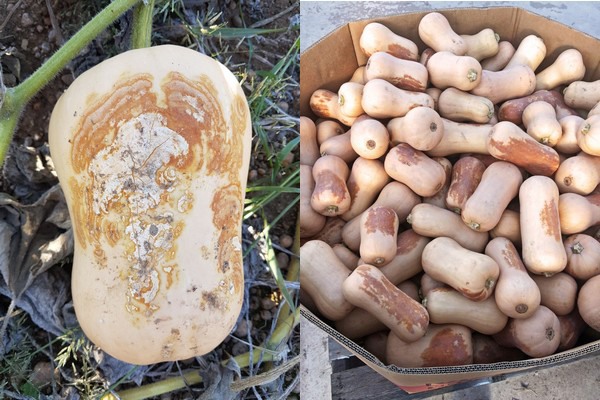
Etch is associated with wet weather. So, the only farmers benefiting from the current drought are the pumpkin growers. However, rain will eventually fall again, raising the question of what to do with etched fruit.
Most butternut pumpkins are sold cut in half and overwrapped, displaying clearly the flawless flesh beneath the blemished skin. We conducted a small retail study looking at consumer preferences. Header cards indicated the etched and non-etched fruit.
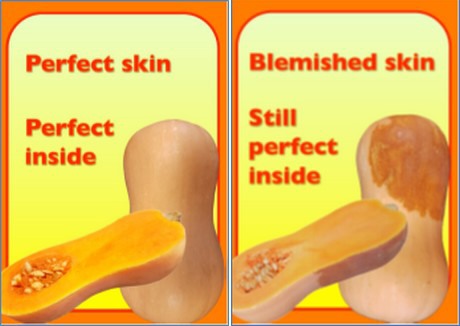
Retail header cards used with clean and etched pumpkins.
When we discounted etched fruit by 50c/kg we sold 12% more etched than pristine pumpkins. Even without a discount, etched pumpkins still sold well. This suggests that if people can see the flesh is fine to eat, there is minimal effect to purchasing and a maximum reduction to wastage.
Simply cutting etched fruit in half and enlightening the consumers could solve what is, after all, a problem that is only skin deep …
For a summary of the project outcomes or more information about brown etch on pumpkins, please contact: Dr Jenny Ekman, Applied Horticultural Research [email protected]
This project has been funded by Hort Innovation using the vegetable research and development levy and contributions from the Australian Government. Project number VG15064.