The first batches of national kiwi made their triumphal entry into the Central Market of Buenos Aires and aroused the expectation of operators and consumers of this fruit that became popular in the country in the nineties.
With a cultivation area of approximately 900 hectares, the most important kiwi producing areas are located in Buenos Aires, Mar del Plata, Baradero, Lima, Zarate, La Plata, and Madariaga. Due to the exchange rate, people are trading the kiwis imported from Italy for the ones made in Argentina, which are tastier and have more popular prices.
The Central Market receives more than 5,000 tons of kiwi per year, mainly of the Hayward variety. "It is the best known variety because of its characteristic green color," stated agronomist Alberto Beraja, the head of the Fruit and Vegetable Division of the Quality and Technology Management of the Central Market of Buenos Aires.
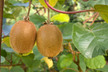
In a dialogue with FM Mercado 90.9, the specialist stated that Gold variety was the tastiest and least acidic kiwi, which was very easy to distinguish because of its yellow flesh. However, he said, it has a lower commercial output. Beraja said that the Central Market placed special emphasis on the degree of maturity of the kiwis they sold to guarantee their quality. Their Brix degrees are measured in a laboratory to know the sugar content of the fruit.
In Argentina, according to the current norm, kiwi must have a minimum of 7.5 degrees to be marketed. "It's important to point out that we can enjoy kiwi all year round thanks to the work of the producers and wholesale operators who use refrigerated chambers with a controlled atmosphere for their conservation," the Central Market stated.
"In addition, this fruit is spectacular for people's health. It has a high content of vitamin C, as a medium kiwi is equivalent to 3 or 4 oranges. It also has vitamin A, potassium, and a low sodium content, so even people with hypertension problems can consume them."
Source: clarin.com