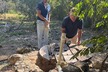
On August 23 and 24, 2018, a land summit was organized by Landbouweekblad in collaboration with AgriSA in a small town to the north of Pretoria.
Landbouweekblad is the oldest and largest agricultural publication in South Africa. AgriSA is the biggest of South Africa’s four organized agricultural organizations representing the majority of the estimated 35,000 commercial farmers. The summit brought together some of South Africa’s best minds as far as land reform and the broad transformation of the agricultural sector is concerned.
The Deputy President of South Africa, David Mabuza, also addressed the summit. In his address, Mabuza reconfirmed the historic mission of the ANC-led government of creating a united, democratic, non-racial, non-sexist and prosperous South Africa. He reiterated that the leadership of the ANC and government are clear that the implementation of land reform measures must not result in social fractures and racial polarization.
Repeating assurances given by President Cyril Ramaphosa, he added that the land reform processes pose no direct threat to the agriculture sector and the economy as a whole.
Agri SA and its farmer-representatives keep discussing trade and the strengthened relations with international markets, farm security, as well as its opposition to expropriation without compensation (EWC) and farm landgrabs. Agri SA has a standing policy to engage with all role-players in the country that work towards a sustainable, transformed and competitive agricultural sector.
Source: gain.fas.usda.gov