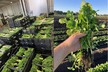
The cultivation of aromatic and medicinal plants (AMP) has interesting growth prospects. It could become economically relevant and help promote rural development, especially in view of the increase in world demand to meet the needs of the food, pharmaceutical and cosmetic industries.
Even though their production is highly atomised, which sometimes hinders business development, the sector's commitment to the cooperative model could be revolutionary, according to several sources.
They highlight the crops' great potential, since Spain has special climatic conditions for their cultivation and obtains high quality productions, recognised in the national and international markets.
Collecting data on this "microsector" is complicated due to its atomisation and the great diversity of botanical species and productive models (wild harvesting versus cultivation, dry or irrigated, monoculture or mixed cultivation, etc.).
According to the Yearbook of Agrarian Statistics (2015), Spain has some 19,773 hectares devoted to AMP, which includes 2,514 hectares of lavender and lavandin, 1,747 hectares of peppers for paprika powder, 3,594 hectares of anise, 515 hectares of hops, 170 hectares of saffron, 76 hectares of chicory, 67 hectares of liquorice, 46 hectares of mint, 7 hectares of cumin and 11,037 hectares of other crops, especially opium poppy for the pharmaceutical industry.
As for organic production (a business model worth taking into account, given the growing demand), the acreage devoted to medicinal, aromatic and condimentary plants stood at around 9,000 hectares in 2017, according to the latest data from the Ministry of Agriculture.
Of these, two thirds are in Castile-La Mancha (almost 6,000 hectares). Next in importance are Aragon (1,029 hectares), Murcia (870 hectares) and Andalusia (527 hectares), among others.
Aromatic and medicinal plants can be sold in a variety of markets, depending on the final product. The range includes medicinal plants (herbal stores), herbs and spices (food seasoning), essential oils (perfumery or cosmetics), extracts (pharmaceutical-medicinal and additives for the food industry) and fresh plant material (agro-food).
"It is necessary to train producers" in very different areas, "so that they can be sufficiently competitive with a quality product," said Eva Moré, of the Aromatic and Medicinal Plants Group of the Forest Technology Centre of Catalonia (CTFC).