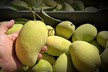
Mangoes are a popular type of fruit in India. “It’s the most important type of fruit and is known as the ‘king of fruit,’” says Sandeep Mahajan of SAM Solutions. “The export volume will probably be higher than last year, and surpass the limit of 50,000 tonnes.” Last year, export amounted to 45,370 tonnes according to official figures form APEDA. That increase in volume is the result of new export destinations, such as Korea, which opened their borders for Indian mangoes. More is also exported to New Zealand and Australia.

Europe an appealing market
SAM Solutions is a major exporter of mango, pomegranate and fresh vegetables. Mango is the largest product for export. “We supply a number of varieties, including Alphonso, Kesar, Banganapalli, Dussehri and Totapuri,”Sandeep explains. The company’s biggest customers are supermarkets and hypermarkets in the Gulf states and India. Export figures show that these are the largest export markets for the entire country.
In 2010/11, the United Arab Emirates was the largest buyer, good for 61.79 per cent of the mango export. This was followed by Bangladesh (11.41 per cent), the UK (8.92 per cent), Saudi Arabia (3.79 per cent), Kuwait (2.32 per cent) and Bahrain (2.19 per cent).

For the coming season, Sandeep is explicitly looking towards the European market, where he sees opportunities for Indian mangoes. “We want to broaden our horizon,” Sandeep explains. The UK, Germany, France and the Netherlands are interesting markets, he continues. For exporters in Asia, Europe is a fairly simple market. “The acceptance of multiple varieties is larger thanks to the large group of Asian immigrants. Besides, phytosanitary requirements are less strict and transport costs are a smaller factor in export to Europe than to the US.” In Europe, mangoes from Pakistan and India compete with other non-European countries of origin. In the US, nearby countries such as Mexico and Haiti have a major advantage.

1,000 varieties
“The season starts in the final week of March, but it lasts until the end of April before the large number of varieties become available from the bazaars,” he continues. In some regions of India, that can even take until early August. The mango is popular in India. More fruit is consumed annually, and the mango also profits from this trend. “Since time immemorial, mangoes have been grown in India. Stories about mangoes even occur in our mythology and history,” Sandeep says.
“India is the largest mango producer in the world,” Sandeep says. In total, the country has about 2,300 hectares on which 15.03 million tonnes is harvested every year. That amounts to just over 40 per cent of global production. The most important production regions are: Andhra Pradesh, Maharashtra, Bihar, Karnataka, Tamil Nadu, Orissa, West Bengal, Gujarat, Uttar Pradesh. According to the trader, 1,000 different varieties are grown all over the subcontinent. He gives an overview of some well known varieties:
 Alphonso
Season – May to June
“There is a good chance you have heard of the small spherical Alphonso mangoes, and perhaps even believe it to be the ‘king of mangoes’ which is how it is marketed. Native to Maharashtra, it is also grown in Gujarat and parts of Karnataka and Madhya Pradesh. This is perhaps the most expensive variety of Indian mangoes and is exported in plenty.”
Kesar
Season – June to Early July
“If your house is filled with the fragrance of mango, there’s a good chance you have Kesar aam in the kitchen. Its smell is its most distinguishing feature, the colour of the pulp resembling saffron, the spice it is named after. The skin is greener than most other mangoes. Grown in and around Ahmedabad, Gujarat, these are used primarily to make Mango Juice in Gujarat.”
Banganapalli
Season - April to June
“This is one of the earliest varieties of mangoes to hit the market. Originally from AndhraPradesh, this variety has found widespread acceptance across the country. The skin has a lovely bright yellow hue and the taste is slightly sour. These mangoes are quite fibreless.”
Dussehri
Season - June to July
“This one is best enjoyed by tearing off the tip and sucking out the sweet pulp and juice. You can soften the mango by pressing it lightly with your fingertips beforehand. Popular in its homeland, Uttar Pradesh, a typical village scene involves a bucket full of Dussehri aam, kids sitting around it and indulging in them till the bucket is empty. Arguably one of the oldest mango variety in the country, Dussehri traces its roots back to the Nawab of Lucknow’s gardens in the 18th century. Today, they come from the Malihabad belt, 30km from Lucknow.”
 Totapuri
Season – June to July
“These mangoes are the easiest to identify, due to the shape with the tip looking like a parrot’s beak. Totapuri hails from Karnataka, Andhra Pradesh, Telangana and Tamil Nadu. The flesh is not sweet like the other mango varieties but is great for salads or with a tempering of salt and chillis. It is used as an ingredient for many mass-produced mango products in India.”
Neelam
Season – May to July
“Noticeable with its distinctive lovely fragrance, Neelam is available throughout the season but the tastiest ones come in only by June with the monsoons. These mangoes are a favorite in Hyderabad, though they are produced all over the country. They are tiny in comparison to other varieties and have orange skin.”
Chausa
Season – July to August
“Just when you think the mango season is coming to an end, Chausa floods the market and there joy in the world again. Popular in North India and Bihar, these mangoes have incredibly sweet pulp and bright yellow skin.”
Langra
Season – Mid July to August
“It is a mystery to many why this mango is called Langra (literally meaning a disabled person who can’t walk well). The mother tree for this variety still grows in Varanasi, whose owner was unfortunately lame, which is where the mango got its name. But nomenclature aside, this fibrous mango finds great popularity in West Bengal as well as Haryana, Uttar Pradesh and Bihar.”
More information:
Sam Solutions
Sandeep Mahajan
E: [email protected]
W: www.mumbaifresh.com
M: +91 98198 12215
For the coming season, Sandeep is explicitly looking towards the European market, where he sees opportunities for Indian mangoes. “We want to broaden our horizon,” Sandeep explains. The UK, Germany, France and the Netherlands are interesting markets, he continues. For exporters in Asia, Europe is a fairly simple market. “The acceptance of multiple varieties is larger thanks to the large group of Asian immigrants. Besides, phytosanitary requirements are less strict and transport costs are a smaller factor in export to Europe than to the US.” In Europe, mangoes from Pakistan and India compete with other non-European countries of origin. In the US, nearby countries such as Mexico and Haiti have a major advantage.
1,000 varieties
“The season starts in the final week of March, but it lasts until the end of April before the large number of varieties become available from the bazaars,” he continues. In some regions of India, that can even take until early August. The mango is popular in India. More fruit is consumed annually, and the mango also profits from this trend. “Since time immemorial, mangoes have been grown in India. Stories about mangoes even occur in our mythology and history,” Sandeep says.
“India is the largest mango producer in the world,” Sandeep says. In total, the country has about 2,300 hectares on which 15.03 million tonnes is harvested every year. That amounts to just over 40 per cent of global production. The most important production regions are: Andhra Pradesh, Maharashtra, Bihar, Karnataka, Tamil Nadu, Orissa, West Bengal, Gujarat, Uttar Pradesh. According to the trader, 1,000 different varieties are grown all over the subcontinent. He gives an overview of some well known varieties:
Alphonso Season – May to June
“There is a good chance you have heard of the small spherical Alphonso mangoes, and perhaps even believe it to be the ‘king of mangoes’ which is how it is marketed. Native to Maharashtra, it is also grown in Gujarat and parts of Karnataka and Madhya Pradesh. This is perhaps the most expensive variety of Indian mangoes and is exported in plenty.”
Kesar
Season – June to Early July
“If your house is filled with the fragrance of mango, there’s a good chance you have Kesar aam in the kitchen. Its smell is its most distinguishing feature, the colour of the pulp resembling saffron, the spice it is named after. The skin is greener than most other mangoes. Grown in and around Ahmedabad, Gujarat, these are used primarily to make Mango Juice in Gujarat.”
Banganapalli
Season - April to June
“This is one of the earliest varieties of mangoes to hit the market. Originally from AndhraPradesh, this variety has found widespread acceptance across the country. The skin has a lovely bright yellow hue and the taste is slightly sour. These mangoes are quite fibreless.”
Dussehri
Season - June to July
“This one is best enjoyed by tearing off the tip and sucking out the sweet pulp and juice. You can soften the mango by pressing it lightly with your fingertips beforehand. Popular in its homeland, Uttar Pradesh, a typical village scene involves a bucket full of Dussehri aam, kids sitting around it and indulging in them till the bucket is empty. Arguably one of the oldest mango variety in the country, Dussehri traces its roots back to the Nawab of Lucknow’s gardens in the 18th century. Today, they come from the Malihabad belt, 30km from Lucknow.”
TotapuriSeason – June to July
“These mangoes are the easiest to identify, due to the shape with the tip looking like a parrot’s beak. Totapuri hails from Karnataka, Andhra Pradesh, Telangana and Tamil Nadu. The flesh is not sweet like the other mango varieties but is great for salads or with a tempering of salt and chillis. It is used as an ingredient for many mass-produced mango products in India.”
Neelam
Season – May to July
“Noticeable with its distinctive lovely fragrance, Neelam is available throughout the season but the tastiest ones come in only by June with the monsoons. These mangoes are a favorite in Hyderabad, though they are produced all over the country. They are tiny in comparison to other varieties and have orange skin.”
Chausa
Season – July to August
“Just when you think the mango season is coming to an end, Chausa floods the market and there joy in the world again. Popular in North India and Bihar, these mangoes have incredibly sweet pulp and bright yellow skin.”
Langra
Season – Mid July to August
“It is a mystery to many why this mango is called Langra (literally meaning a disabled person who can’t walk well). The mother tree for this variety still grows in Varanasi, whose owner was unfortunately lame, which is where the mango got its name. But nomenclature aside, this fibrous mango finds great popularity in West Bengal as well as Haryana, Uttar Pradesh and Bihar.”
More information:
Sam Solutions
Sandeep Mahajan
E: [email protected]
W: www.mumbaifresh.com
M: +91 98198 12215