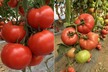
Producers are able to grow large tomatoes because of a mutation in the cell size regulator gene that took place during the tomato domestication process. Scientist Esther van der Knaap, of the University of Georgia in Athens, Greece, and her colleagues describe this genetic variant in a study published Thursday in the open access journal 'PLOS Genetics'.
When humans started to grow wild tomatoes in the Andean mountainous regions of Ecuador and northern Peru, they continually selected plants that produced larger fruits. Now, thousands of years later, tomatoes on the market can weigh 1,000 times more than the fruits of their ancestors.
In this study, the researchers analysed a gene they called the Cell Size Regulator (CSR), which increases tomato weight by increasing the size of individual cells in the pericarp, which is the fleshy part of the tomato.
Compared to wild tomatoes, domesticated varieties carry a mutation in CSR genes that shortens the resulting protein in tomato cells, and this truncation probably affects their role in regulating cell differentiation and maturation in fruit and vascular tissues. The origin of the variation is in cherry tomatoes, but it now appears in all large varieties of cultivated tomatoes.
The new study serves to expand previous research that had identified the location of CSR on the bottom of chromosome 11 as just a small genetic contributor to tomato weight. Now, with the cloning of the gene, the finding that most of cultivated tomatoes carry the shorter version of the CSR gene suggests that humans extensively selected this genetic variation, which was instrumental in fully achieving the domestication of tomatoes.
"The CSR is needed to produce large tomatoes for the industry. This is because large tomatoes critically increase profit margins for the growers. Knowledge of the gene will now open up ways of researching how to further increase tomato size without this having a negative impact on other important qualities, such as resistance to diseases and taste," says Van der Knaap.
Source: Europa Press