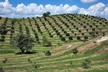
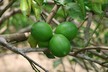
California citrus growers have watched with concern as the devastating disease known as citrus greening has crippled Florida's citrus industry. It's a threat not just to California's orange industry, but to the collection of rare, wild and heirloom varieties used to breed new crops that the U.S. Department of Agriculture currently "stores" in the state.
This collection of varieties is grown in field-based plots and insect-proof greenhouses in places like Riverside or the Coachella and Central valleys. To conserve valuable genetic diversity, the USDA maintains at least two copies of each plant in these fields. Unlike seed crops, however, most fruit crops are clonal, or grown from cuttings — which means they are not backed up at gene banks like the Svalbard Seed Vault in Norway.
So, to create its own deep freeze of tissues, the citrus industry turned to cryopreservation. Gayle Volk, a USDA plant physiologist based in Fort Collins, Colo., has developed a way to freeze citrus cuttings so they can later be revived. The process requires snipping tiny shoot tips off a living plant, adding a cocktail of chemicals that replaces water in the cells, and plunging the cuttings into liquid nitrogen. To date, this method has protected 344 commercially important varieties, largely within the past nine months.
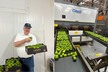
Jeffrey Steen, a third generation citrus grower near Visalia, Calif hopes that these efforts to protect diversity inspire other crop industry groups to help fund cryopreservation efforts. "Preserving diversity — not just for disease but for taste and flavor — gives us the ability to bring things back," he says.
source: npr.org