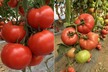
The export value of tomatoes has increased significantly the past five years. This is partly due to an increase in volumes, but mainly due to an increase of the price. The Dutch producers seem to be able to ask higher prices for tomatoes. An explanation for this is due to the fact that the Dutch tomato has a good reputation. However, the position of the tomato remains fragile. In 2016, the export value decreased and the European market is saturated.
The Dutch tomato is popular. The constant quality, very low residue values, due to sustainable production, and the supply reliability – especially in light of recent events in Murcia – are big plusses for the Dutch tomato.
Dutch tomatoes are produced for fresh consumption
The high quality of the Dutch tomato depends on the intended destination. Nearly all tomatoes in the Netherlands are produced for fresh consumption, while countries such as Portugal or Spain mainly focus on the production of tomatoes for industrial processing.
Higher prices for Dutch tomatoes
The appreciation for the Dutch tomato can be seen in the higher prices that the Dutch produces can ask, relative to other European tomato exporters. According to the latest available data (2015) in Eurostat, the price for Dutch tomatoes was €73/100kg, while Portuguese tomatoes are sold for €58/100kg and the price for the Spanish tomato oscillated around €50/100kg. The price of the Dutch tomato has been above the tomato price of other exporting countries.
Export value of tomatoes increased by 30% in seven years
The most recent numbers actually show a decrease in export value. In the first nine months of 2016, 1.2 billion euros worth of tomatoes were exported. This was a decrease of four percent relative to the same period in 2015, but the export value is still on a relatively high level.
Growing supply and decreasing demand results in fragile position
Despite the relatively high export value, the position of the tomato is fragile. The European market seems saturated; the production of tomatoes in Europe has increased significantly in the past five years. Mainly the Polish production increased, but also Spain and Portugal have harvested significantly more tomatoes. For example, Spain produced 23 percent more tomatoes from 2011 to 2016. Portugal harvested in that same period 33 percent more tomatoes. However, it should be noted that these countries for the main part produce for the domestic market or the industrial processing of tomatoes. In the Netherlands, the producers have not been quiet. Due to the introduction of new varieties, the producers have been able to produce more kilos per square metre.
While the supply is obviously increasing, the growth of demand for tomatoes remains uncertain. First, the economic changes play a big part. The United Kingdom is the most important market but one for the Dutch tomato. The announced Brexit will have an influence on the export to the country. How big this influence will be, depends on the negotiations between the EU and the UK. Beside the economic development, the social and demographic trends also play a role. Research has shown that the European consumer eats fewer vegetables instead of more. In addition, the population growth in Europe is relatively low compared to other continents, such as Africa and Asia. Moreover, the wellness level in Europe is relatively high and increases less rapidly than in Asia, for example.
The growth of demand for tomatoes will have to come from more countries outside of Europe in the future. Within Europe, the Dutch tomato could win a larger market share by competing on quality with other large exporters, such as Spain. And, exactly that quality has proven itself in the past years.
Source: ABN-AMRO Agricultural News