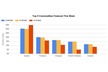
For the fourth year in a row, India's horticulture production has outstripped grain output. Despite widespread drought last year, farmers across India reaped a bumper harvest of horticultural produce with production crossing 283 million tonnes in 2015-16, as per the third advance estimates released by the agriculture ministry on Monday 5 September.
This estimate is marginally higher than the 282.8-million- tonne second advance estimate released in May. The latest numbers show 0.8% growth over the 280.9 million tonnes produced in 2014-15.
In 2015-16, horticultural production exceeded foodgrain output by more than 31 million tonnes. In 2012-13, the difference was 11.3 million tonne.
The fact that horticulture crops are grown in about 10% of India’s gross cropped area, compared to over 50% of the area used to grow food grain, also signals the success of small and marginal farmers in growing more fruits and vegetables, driven by higher demand.
The data shows that Uttar Pradesh, Andhra Pradesh and Maharashtra are the top three fruit-producing states, accounting for nearly a third of India’s fruit production.
Uttar Pradesh, West Bengal and Madhya Pradesh are the top three vegetable producers, contributing nearly 40% to the total production.
Furthermore, the latest estimate shows that major horticulture crops, such as onion and tomatoes, saw robust production growth in 2015-16, despite a severe monsoon deficit that affected production of food grain, especially pulses.
The estimate further shows that farmers harvested 91 million tonnes of fruit—a 2% rise over 2014-15—and 167 million tonnes of vegetables, similar to the harvest during the previous year.
A growing market for horticulture crops and quicker cash flows have led farmers to grow more fruits and vegetables, said an official with the agriculture ministry, who did not want to be named.
Data shows that despite the higher production of vegetables, which rose from 162.9 million tonnes in 2013-14 to 166.6 million tonnes in 2015-16, prices rose by more than 14% during June and July (year-on- year) this year.
“Horticulture has demonstrated its resilience to drought by producing more. However, one fears that this steady rise in output is also contributing to a corresponding rise in food loss,” said Pawanexh Kohli, the chief adviser at the National Centre for Cold Chain Development, a think-tank under the agriculture ministry.
“The problem is that the higher production is not always reaching the end consumer due to inefficiencies in the supply chain, leading to price spikes,” Kohli said. “The government is working to revamp cold chain infrastructure as a way to mitigate food loss and create more value for farmers.''
Source: livemint.com