On 26th August 2016, a meeting was held to analyse the effectiveness of anti-insect nets against Halyomorpha halys, the brown marmorated stink bug, in orchards.
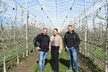
Tests were carried out in two peach and two apple orchards, where pearl photoselective anti-hail nets were installed on the Alt'Carpo model. The two peach (Amiga and Fire Top) and the two apple orchards (Brookfield and Galaval) are located in the Cuneo province. After initial knockdown treatments, no pesticides were used during testing.
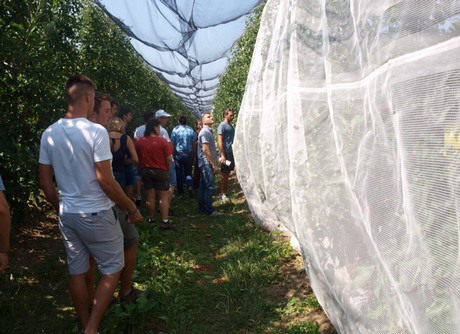
Photo: DISAFA
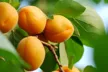
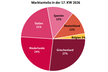
The damage caused by H. halys on harvesting was 5.0% and 7.5% for Amiga and Fire Top peaches respectively, i.e. much lower than in unprotected orchards (49.0% and 53.2%) and throughout the company in general (21.7% and 34.6%). In one Galaval apple orchard, the damage affected 2.40% of the harvested produce, while those in unprotected orchards and throughout the company in general was 3.43 and 2.93% respectively.
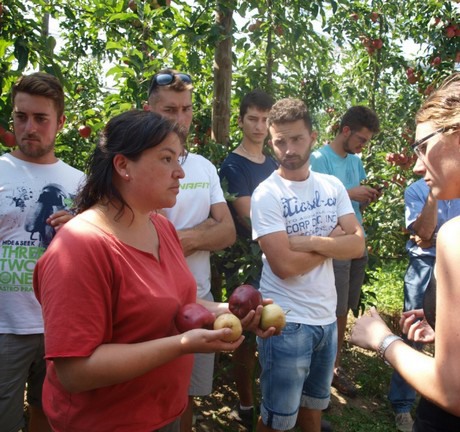
Photo: DISAFA
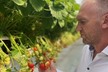
"Traps and pheromones attracted the bug only to the outside of the net - we started in late July in peach orchards, with a peak of 6 bugs per trap until mid-August, and continued from mid-August in apple orchards, with a peak of 2 bugs per trap until the 23rd," explained entomologist Luciana Tavella.
"We also assessed the development of post-harvesting rot, which was much higher for the produce outside the nets and was therefore probably favoured by the bug," added pathologist Davide Spadaro.
Contacts:
Luciana Tavella
Dipartimento di Scienze Agrarie, Forestali e Alimentari (DISAFA)
Largo Paolo Braccini 2
10095 Grugliasco (Torino)
Tel.: (+39) 011 6708533
Email: [email protected]