A team of Japanese scientists have been following animal trails searching for bear feces with cherry seeds inside. Their aim is to find out if bears can help cherry trees outrun climate change, as the trees depend on the animals to spread their seeds.
As the global climate warms, plants and animals are having a harder time surviving in the places where they’ve done well in the past. To live, they will have to migrate to places where the climate feels more familiar. Usually that means towards one of the poles, or further up a mountain. Those movements are already happening, but one of the big unanswered questions of climate change is if other species—plants, in particular—will be able to move fast enough that they’ll colonize new, now-warmer areas, before their current habitats become unliveable.
For plants, one way to survive, at least in the short term, could be moving up the slope of mountains. “It is likely the most efficient way of plant escape,” say Shoji Naoe, who led the study of bears and cherry trees. Moving 100 yards vertically up a mountain can translate to a more significant drop in temperature than moving 100 yards towards a pole.
Naoe and his colleagues were looking to see if the mammals that dispersed cherry tree seeds were moving them fast enough and far enough to make a difference. The cherry tree they studied, Prunus verecunda, disperses its seeds only by enticing animals to eat its fruit. When the scientists surveyed their routes, they would identify, by size, shape and smell, the feces of two particular species of wild cherry enthusiasts, Asiatic black bears and Japanese martens.
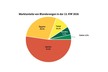
What they found was that the animals—mostly the bears—were transporting the cherry seeds over several hundred yards, a big enough change in altitude that, theoretically, the trees would be able to ascend as quickly as the climate warmed. The bears were also almost always moving the seeds up the mountain.
It was a very elegant finding, and surprisingly so. Not only were the bears moving the seeds far enough that they had a chance of surviving, they were moving them in the right direction. What was going on?
The scientists think that the cherry trees are benefitting from the time at which they produce fruit, in the spring. In that season, bears are usually heading up the mountains, grazing as they go. Since temperatures higher up are cooler, those plants produce fruit, aka bear food, later in the season. The bears, following the fruit, just happen to be going in the direction that’s most beneficial for the cherry trees.
This is good news for trees that produce seeds in the spring. But it could work in reverse for trees that bear fruit in autumn: in that season, animals like bears head down the mountains as the chill sets in, and if they take seeds with them, they could be planting those seeds at too-warm altitudes, where they will never grow into thriving trees. It also would only apply to trees in temperate climates, Naoe points out, because tropical climates don’t have the same seasonal cycles.
Studies like this one can help focus efforts to aid in migration: if bears are relocating cherry trees further up mountains, then humans don’t have to and can focus on transplanting apple trees, say.
Source: atlasobscura.com