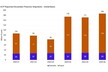
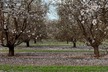
A February report from the Victorian Government showed that about 20,000ha of new almond and walnut trees were either being planted or planned in the state’s northwest. Almonds are Victoria’s fastest growing agricultural export, worth $381 million in 2014-15, according to the Australian Bureau of Statistics, and production of the nut has almost doubled in just three years.
Experts say that only the three to five-year lead time in establishing plantations is preventing an exodus from grape vines and citrus orchards in Sunraysia, South Australia’s Riverland and the NSW Riverina.
Some farmers are instead replacing rows of wine and table grape vines with almonds to progressively make the switch, according to Almond Board of Australia chief executive Ross Skinner.
“We have seen a shift from wine grapes in particular,” Mr Skinner said.
“The economics stack up. It is a viable alternative to have even 20-30 hectare plantations.”
Former Select Harvest production manager and tree seedling supplier Tim Millen said big orchardists such as Olam would continue to dominate production.
“The smaller farmers will stay a small percentage. It is hard to dramatically change your business,” Mr Millen said. “I have spoken to hundreds of growers about switching and I am amazed more people aren’t doing it.”
He said almond trees produced their first harvest in three years and were fully mature in six to seven years and could produce $30,000 in gross returns per hectare.
Red Cliffs mixed farmer Keith Sharman has started growing almonds on what was once a traditional grape block in an attempt to diversity his income.
Real estate agent Jesse Manuel is selling a 25ha almond orchard in the Riverland and says the small plantations are rarely offered for sale.
“There aren’t many sellers because they are all making money,” Mr Manuel said.
Once established, almonds need between 14 and 16 megalitres of irrigation water a hectare a year.
Source: weeklytimesnow.com.au