Spanish fresh fruit and vegetable exports during the first quarter of 2015 grew by 7.5% in volume and 9.9% in value compared to the same period in 2014. The volume marketed overseas reached 3,745 274 tonnes worth 3,487 million Euro, with vegetables representing 52% and fruits 48% of the value, according to the Department of Customs and Special Taxes of the Ministry of Economy and Competitiveness.
The good performance of Spanish exports, when it comes to vegetables, is attributable to the recovery in March, with an increase of 8.2% in volume and 14% in value compared to the same month of 2014. These increases compensated for the drops registered in February (-3.8%) and January (-2.1%). During the quarter at hand, the volume remained practically stable, with a 0.61% growth and the value increased by 5.37%. By products, the most noteworthy increases were registered by courgettes, with 138 million Euro (+77.7%), cabbages, 187 million (+17%) and lettuce, with 251 million Euro (+4%), while drops were registered by peppers, with 323 million (-1.4%) and tomatoes, with 412 million (-3%).
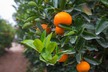
Fruit exports grew by 15.28% in volume and 15.34% in value, to a total of 1,892,741 tonnes and 1,668 million Euro. This growth is mainly attributable to citrus fruits, mainly oranges, which reached 455.5 million Euro in turnover (+28.5%), and berries (strawberries, raspberries, blueberries and blackberries), with 350 million Euro (+29%).
For FEPEX, the uneven performance by products with similar markets underlines the strong competition from Morocco, focused on some products, and the need to adopt, on the one hand, measures to improve the competitiveness of these crops, and on the other, to ensure the conditions of the partnership agreement with that country are enforced.
The Spanish import of fruits and vegetables increased by 2% in terms of volume in the first quarter of 2015, reaching 631,529 tonnes, and by 9% in terms of value, with 456.4 million Euro in turnover. This is mostly due to the growth of fruit, up 3% in volume and 14% in value, reaching 282,427 tonnes and 286.5 million Euro, respectively, according to the Ministry of Economy and Competitiveness.
In the fruit sector, the most noteworthy increases are those of kiwis, with 29,264 tonnes (+16%); pears, with 14,426 tonnes (+43%); mangoes, with 10,277 tonnes (+36%) and avocados, with 5,964 tonnes (+17%).
By contrast, drops in import volumes were registered by bananas, with 54,213 tonnes (-8%) worth 37.1 million Euro (+ 9%) and apples with 48,828 tonnes (-3%) worth 33.7 million Euro (-18%).
The import of vegetables between January and March 2015 amounted to 349,102 tonnes, 1% more than in the first quarter of 2014, worth 169.8 million Euro (+1%). The most imported vegetables are potatoes, with 240,193 tonnes (+1%) and 42.8 million Euro (-37%), and green beans, with 27,812 tonnes (-9%) and 49.7 million Euro (+23.5%).
Potatoes remain Spain's most imported vegetable in terms of volume, although in terms of value the biggest product are green beans, which recorded an average growth rate of 36%, with Morocco as the country's largest supplier. Of the 27,812 tonnes of green beans imported by Spain during the first quarter of 2015, a total of 27,470 tonnes came from Morocco.
Also noteworthy in this period is the strong growth of tomato imports, with 12,919 tonnes (+94%) and 11.6 million Euro (+155%). The average price of imported tomatoes from Morocco grew by 31.5%, and, as in the case of green beans, the North African country is Spain's largest supplier, with a total of 10,178 tonnes, representing 79% of the tomatoes imported by Spain, according to data from the Department of Customs and Special Taxes of the Ministry of Economy and Competitiveness.
European Union
Spanish fruit and vegetable exports to the European Union in the first quarter of 2015 increased by 12% in value and 9% in volume compared to the same period of 2014, totalling 3,219 million Euro and 3.4 million tonnes.
The share of the EU in the total value of Spanish exports in the first quarter of 2015 was of 92.3%, compared to 90.5% in the same period of 2014, while exports to third countries decreased by 11% in value, reaching 268 million Euro. The share of non-EU countries in the total value of Spain's horticultural exports was of 7.6%.
The decline in exports to non-EU countries was mainly caused by the Russian veto on European fruit and vegetables, in force since 7 August 2014. Spanish exports to non-EU European countries reached 117.5 million Euro (-32%) and 107,896 tonnes (-35%). Also noteworthy is the decline of exports to Norway, with 31.6 million Euro (-6%).
When it comes to non-European third countries, the value of exports has grown by 18% in the first quarter of 2015, reaching 150.5 million Euro, while volume has gone up by 20%, reaching 172,000 tonnes. In any case, these still represent a very small share of the country's total exports, with 4.3% of the value and 4.5% of the volume. The main destination in the first quarter was the UAE, with 49,878 tonnes, up 2%. Also noteworthy are the shipments to Algeria, with a 2% increase and a total of 16,025 tonnes, and Canada, with 15,336 tonnes (-1%).
For FEPEX, these results reflect the need to step up efforts to ensure a greater market diversification.