Do we eat because we're hungry, or is there a different reason behind our eating behaviour? According to food expert Brian Wansink* we make around 200 food related decisions every day. Most of them are unconscious and have little to do with how hungry we are. Wansink believes that our tendency to eat is encouraged by various incentives. One of the main incentives is the packaging, according to the psychologist.
Buy and eat
Packaging influences both the purchasing behaviour of consumers and the eating behaviour after purchasing. This means it's important to pay a lot of attention to a good packaging design. But what works and what doesn't?
Colour and taste experience
We all know the stories about the influence of colours on our eating behaviour. The most well known example of this may be the former logo of 'that one well known fast food chain'. Yellow and red seem to stimulate a feeling of hunger. Does this mean good food packaging is by definition always red and yellow? It's not that simple. It depends what you want to convey and how this ties in with the consumer. They have to buy your product first. If the consumer is specifically looking for a responsible meal, brown and green seem to do better than yellow and red.
Transparent packaging
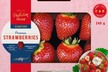
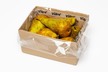
Then there's transparent packaging. How does this packaging influence our eating behaviour? If we look at the purchasing behaviour for consumption I can imagine that you want to see certain products as a consumer. Especially when it comes to packaged fresh products it's good for consumers to see what state the product is in. Take lettuce for example. You want to be able to see that the leaves are fresh and not wilted, don't you?
Contradicting conclusions
When looking at the influence of transparent packaging on our eating behaviour after purchasing there are different (opposite) observations and conclusions. On the one hand the consumption increases when the food is visible and on the other hand it doesn't. The explanation is in the saliency (something that stands out invites you to eat it) and the monitoring effect (insight into the type and amount of food results in a type of consciousness, which makes us eat less) respectively. What does this say about a good packaging design? Presumably small portions work well in transparent packaging. Large portion might be better 'hidden' in closed packaging?
One thing seems clear to me: our perception influences our experience of taste and ultimately our eating behaviour. And as food is usually packaged, we have to think very carefully about the effect of the packaging on the consumer.
Do you know examples of packaging that are clearly of influence on our purchasing and/or eating behaviour? And how does the packaging influence your behaviour?
* Brian Wansink is known for the book 'Hap, slik, weg; waarom we altijd meer eten dan we denken of willen.'
Source: Verpakkingxpert
Do you know examples of packaging that are clearly of influence on our purchasing and/or eating behaviour? And how does the packaging influence your behaviour?
* Brian Wansink is known for the book 'Hap, slik, weg; waarom we altijd meer eten dan we denken of willen.'
Source: Verpakkingxpert