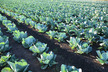
Oman's Jebel Akhdar losing its green sheen as farmers migrate
"Many have lost interest in farming," said an aged farmer in a village who did not want to be named or photographed. "These people want to move to cities to look for white-collar jobs. Educated youngsters are particularly not interested in farming. The Arabic meaning of Jebel Akhdar is the green mountain. If the situation continues like this, we will have to rename it," the aged farmer added while admitting that farming is no more profitable as it was in the past.
On the Jebel Akhdar mountains, farming is mainly practised in villages like Wadi Bani Habib, Shuraijah, Al Aqr and Al Ayn.
"The terraced gardens in these villages were green from top to bottom. But now we can see that the green areas are shrinking," Hamoud, a local from Saloot, the neighbouring village, claimed.
"Farming needs a lot of patience and hard work. Moreover, due to adverse conditions, farming is not turning out to be profitable. So, they are moving on to other jobs to earn money," Hamoud said, adding that low falaj flow, erosion, low pasture production and high expenses are also affecting farming.
Locals say the degradation of the natural resources, poor management practices and strong reliance on external inputs are the main factors limiting the productivity of the traditional oases agriculture on the slopes of Jebel Akhdar.
"Little diversity, poor seeds, lack of market access and competition are the main external obstacles in farming," the locals added.
It is claimed that the terraced gardens in Sayq Plateau in Jebel Akhdar produce one of the world's finest pomegranates and during September-October, Jebel Akhdar transforms into a fruit paradise with the full-blown goodness of luscious fruits — pomegranates, grapes, strawberries, raspberries, pears, apricots, plums, peaches, figs, walnuts and almonds, among others. But it is the pomegranate that stands tall among other fruits.
According to the Ministry of Agriculture and Fisheries data issued in 2013, a total of 52,948 trees, including pomegranates, are scattered all over the mountains.
Source: timesofoman.com