Organic farming growing into lucrative sector in Romania
Authorities blame that on changes in the legislation, which have tightened the requirements for certification. Furthermore, most certified organic farming operators do not process the raw material, but sell it as such, said representatives of the Romanian Agriculture and Rural Development Ministry.
The head of the Association of Organic Farming Operators, Marian Cioceanu, said that the National Rural Development Plan does not earmark increased funds for organic farming: "The National Rural Development Plan has been made public recently, and we’ve been unpleasantly surprised to find that the funds for organic farming were cut back to 100 million Euro for a 7-year period. This means less than 100 Euro per hectare a year, for the current area of 300 thousand hectares of organic farmland. If the Common Agricultural Policy is properly implemented in Romania, we would certainly have over 2 million hectares in 2020. This is due to subsidies, the potential of the Romanian farmland in terms of organic farming and, last but not least, due to the huge demand for organic products, which is growing by the year both in Western Europe and in the USA.”
EU Commissioner for Agriculture, Dacian Ciolos: “Organic farming is one of the sectors registering a high growth rate in recent years, although it still plays a marginal role, considering the small organic production quota, out of the total volume of foodstuff production. We are still facing a situation in which the demand of certified organic products on the market exceeds the supply, considering what the European farmers are producing at the moment. That is why the Common Agricultural Policy includes financial instruments meant to support the conversion from the classical to the certified organic production. It also provides for annual financing for the plots of farmland under organic crop. In the current Common Agricultural Policy, too, we have introduced a specific measure in the rural development programs, this time regarding organic farming, for the Member States which want to support that type of agriculture to be able to do that explicitly, saving and putting aside a certain amount of money they receive under the Rural Development Program for Organic Agriculture.”
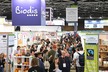
In the first half of February, 40 Romanian companies participated in Nurnberg in the largest agricultural and organic food fair in the world entitled BioFach. Unlike in previous years, the Romanian companies this year focused on processed products. The range of processed products increases from one year to another.”
Recently, the Bio Romania association struck a partnership with the biggest supermarket chain to sell the organic products from its 500 members.
Source: balkans.com