Peru: Ambitious plan to drill through Andes to water desert
The Herculean project to reverse the flow of water and realise a century-old dream is in many ways the most important water work ever in Peru. It could serve as a blueprint for the kind of construction projects needed to tackle worsening water scarcity.
Call it extreme engineering in the age of global warming.
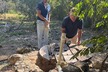
"All of this will be green," said engineer Giovanni Palacios, looking out over miles of brown shrubbery at a construction site he oversees for the Brazilian firm Odebrecht.
Palacios is the director of the Olmos Irrigation Project, an ambitious and - until it starts in 2014 - unproven vision with a $500 million price tag.
It has included drilling a 20 kilometre tunnel through the formidable Andes to capture abundant water flows on the other side. That feat required a drill 305 metres long.
It aims to fix Peru's most emblematic water problem. Rainfall on the coast averages 150mm per year and the project is coming online as Peru's tropical glaciers, a source of fresh water for millions, melt away with rising global temperatures.
"This will all be sugar cane, avocado, passion fruit, and people everywhere will be working, planting, harvesting, packaging," Palacios said, perched on a heap of sand - some of the 2.5 million cubic meters (808 million cubic feet) of earth that have been moved so far to make way for the water.
The Olmos project, which critics say benefits mostly big agricultural companies rather than small farmers, is the most ambitious of seven massive irrigation works that are turning swaths of desert valleys near Peru's coast into profitable, producing fields.
Together they will greenfield some 900 square miles, or about 233,000 hectares (576,000 acres), of desert over the next decade.
Most of the projects tap a few glacier-fed rivers along the Pacific coast. The Olmos irrigation project, however, is the first of at least two that will pull water destined for the Amazon to the coast to feed crops.
Test flows of water on the tunnel for the Olmos Valley were conducted last year.
Next year, Odebrecht will start pumping billions of gallons of water into fields leased by agricultural companies over a 440-square kilometre patch of desert in the northern Lambayeque region, known for its algorrobo trees with roots that stretch up to 50 metres underground to find water.
Peru has long struggled to manage a natural water imbalance that climate change could soon visit on other nations: too much water in some places and not enough in others.
The coastal region west of the Andes range, home to two-thirds of Peru's population and 80 percent of economic activity, receives just 2 percent of the country's fresh water.
The lack of water in regions along the coast already places a "totally crushing" burden on Peru - South America's fastest-growing economy, said Jorge Benites, the conservation director for the national water agency.
"With climate change and rapid population and economic growth, trans-Andean projects like Olmos will surely multiply," Benites said.
Odebrecht estimates the Olmos irrigation project will create about 40,000 direct jobs and another 120,000 indirect jobs - so many that a team of Peruvian architects from different firms designed a new city to house the newcomers.
Engineers say Olmos is the most complex and risky project they have ever worked on, with hot and stuffy conditions inside the mountain requiring air conditioning and unstable geology outside that has caused at least two slides.
Construction on the tunnel was finished in late 2011 and by 2015 enough water to fill 160,000 Olympic-sized swimming pools (400 million cubic meters) can start moving annually through the mountain, powering a small hydroelectric plant in the process.
The project has been a dream of engineers and politicians since the late 19th century, well before worries arose over global warming. It languished over funding issues until 2003, when a decentralisation push moved it to the regional government in Lambayeque to work it out with the private sector.
While the plan is to keep moving water from east of the Andes to the coast, the Peruvian government's appetite to do so with business models like Olmos may be waning.
President Ollanta Humala has touted irrigation works for small farmers instead of industrial projects like Olmos, which was under way before he assumed power, that are financed in part through higher water prices.
Critics say the Olmos project sidelined family farms and gave public resources - land and water - to big export-oriented companies for little in return.
Also, access to water that is too easy can result in salinization, as water-logged fields build up salt in soil at levels toxic to crops.
"Turning Peru's desert into a garden sounds really nice, but how well does it really work?," said Jeffrey Bury, a geographer at the University of California Santa Cruz who studies water issues in Peru.
Source: tvnz.co.nz