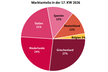
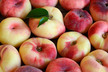
In 2026, interest in flat nectarines is increasing among consumers and growers. According to EastFruit, based on breeding company data, flat nectarines now account for around 10% of planting material sales in Europe, moving beyond a niche segment.
The increase is linked to fruit shape, as well as improvements in taste, productivity, and commercial positioning.
"Flat nectarines are an attractive retail format: convenient, premium, easy for consumers to understand and capable of creating higher value on the shelf," says David Saakyan, founder of BellyBella Fruit Company.
BellyBella Fruit Company is expanding production of flat peaches, flat nectarines, and plums in Armenia. The company has planted 600 hectares of orchards. In 2026, output is expected to reach around 6,000 tons, with plans to increase to 27,000–28,000 tons by 2029–2030.
According to Saakyan, flat peaches were previously more established, but flat nectarines are now gaining traction. Nectarines are considered convenient for consumers, and the flat shape supports positioning as a ready-to-eat product.
"Consumers do not think in agronomic categories. They choose a fruit that is easy to put in a child's school bag, eat on the go, take to the office for lunch, or buy as an attractive and tasty product. In this sense, the flat nectarine is much closer to the modern snack format than to a traditional seasonal fruit," says Saakyan.
According to Staay Food Group, flat nectarines are becoming more visible within the stone fruit category, supported by retail demand, convenience, and taste. As planting expands, availability and consumption are expected to increase.
At the same time, the European stone fruit market remains unstable. Europêch 2025 estimates European peach and nectarine production at approximately 3.2 million tons, 7% below 2024. In Spain, production is forecast at more than 1.4 million tons, down 5% year on year. Flat peaches are estimated to decline by around 7%, reflecting exposure to weather and climate factors.
"For retailers, the priority is a ready commercial product: clear in its positioning, convenient for shelf presentation, manageable in terms of quality, and adapted to different sales formats. The potential of flat nectarines is unlocked when consumers repeatedly receive the taste, appearance, and quality they expect. The first purchase creates interest, the second builds trust, and consistency throughout the season turns the product into a full category. We are developing the production of flat peaches, flat nectarines, and plums in Armenia and see flat nectarines as one of the most promising products for European and international markets," Saakyan emphasizes.
Global statistics for peaches and nectarines do not distinguish flat forms, meaning changes in this segment are more visible through breeder, nursery, and retail activity.
"The future of flat nectarines and flat peaches will depend on whether a supplier can turn a good fruit into a stable retail product. This is the main opportunity for our company and for Armenia as an emerging major player in this category," says Saakyan.
Source: EastFruit