The 2026 war in Iran broke out at a particularly delicate moment for Egypt's orange export campaign. Egyptian exporters had been expecting exports to the Asian market to pick up in early March, following the conclusion of China's lengthy Navel orange season. However, the war has reignited the crisis in the Red Sea and lengthened transit times to East and South Asia. Egyptian exporters' fears also extend to the vital Gulf market, where the logistical situation could slow down exports. Ultimately, these pressures could lead to a shift towards the European market, resulting in oversupply and declining prices.
These scenarios, although realistic since they have already been experienced by Egyptian professionals at the height of the Red Sea crisis in 2023-2024, are not inevitable, and strong demand for oranges in many global markets is contributing to the resilience of Egyptian exporters this season, despite the turbulent geopolitical situation. This is according to Mohamed Shaker, export manager at Al Mansi.
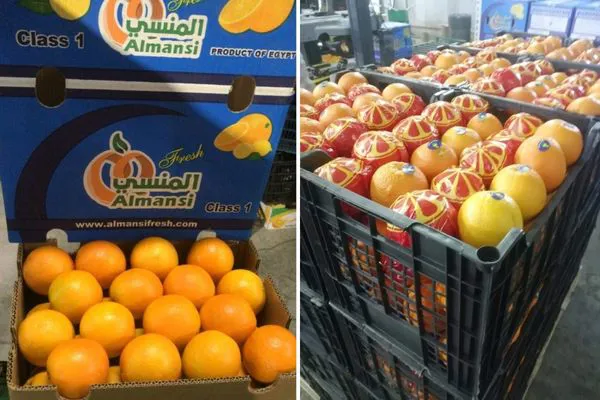
The exporter reports that demand from Gulf countries for Egyptian Valencia oranges is holding firm, and shipments are continuing despite logistical disruptions through alternative routes. He explains: "We are continuing to deliver to Saudi Arabia and further afield in the Gulf countries by road. Transport costs have naturally increased due to the new conditions, which is entirely to be expected. Saudi demand remains strong, and we are even seeing growth in demand from importers in Oman. In addition to the Gulf countries, the season has just begun in other neighboring countries such as Jordan."
According to Shaker, export prices for Egyptian oranges remain at pre-war levels in Gulf markets. He continues: "Nothing has changed on our side; our costs are still the same, but they could rise very soon due to war-induced inflation. The only increase is in transportation costs."
In East and South Asian countries, the growth in demand projected at the beginning of March is well on track, according to Shaker. "Exports have not been interrupted. We are seeing an increase in demand, particularly from Bangladesh and India, which we had anticipated, and this has not been impacted by the war. Transit time to these markets increased by 15 to 20 days immediately after the war broke out due to the closure of the Red Sea and the need to reroute around the Cape of Good Hope, which has led to increased transportation costs. However, transport costs remain within acceptable limits, and the strength of the Valencia variety makes it able to withstand the longer transit time," he adds.
The exporter nevertheless acknowledges that supply on the European market is increasing. "Prices remain stable in Europe, however, and the market is active and in demand. At Al Mansy, for example, we are seeing an increase in orders for our oranges from Romania, Belgium, Serbia, and the United Kingdom. We are also seeing the beginnings of demand from France and Spain. So far, there is no oversupply in Europe, prices are stable, and we are not seeing any major impact from the situation in the Middle East.
For more information:
Muhammad Shaker
Al Mansi
Tel: +20 102 562 2070
Email: [email protected]
www.almansifresh.com