In the last few years, more and more farmers are using drones to increase efficiency. Drones help farmers improve yields and stay ahead of problems before they become too big. Olga Walsh -University of Idaho- is researching the use of drones for fruit trees. Most of the agricultural applications for drones—or, more technically unmanned aerial vehicles (UAV) - have been on grain crops like wheat, corn and soy.
"Adoption and use of crop sensors in production agriculture saves thousands of dollars every year in many crops," says Walsh. "Crop sensors also help to significantly improve the efficiency of agricultural inputs, such as fertilizers and water. Finally, drones can minimize negative impacts of agricultural activities on environmental quality."
In Idaho, the fruit industry grows grapes, cranberries, apples, and even alternative fruits like Asian pears. Apples are the largest fruit crop in Idaho, with over 60 million pounds of apples produced per year.
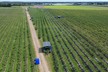
Walsh's research team focused on applying UAV technology to fruit trees. Her previous work has been with wheat and other crops. "We know drones can be used in orchards," says Walsh. "But there aren't any grower recommendations regarding what data needs to be collected and what kind of data is most useful, depending on the grower objective."
The most promising ways the drones could be employed for the orchards and tree nurseries are:
- taking inventory of tree height and canopy volume;
- monitoring tree health and quality;
- managing water, nutrients, pests and disease in-season;
- estimating fruit/nut production and yield;
- creating marketing tools (videos for promotion of the orchard, or sale of trees and fruit).
Source: phys.org/news