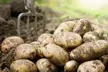
Bolivia's internal market demands around 5 million tons of potatoes but the country only produces 1.1 million tons; the remainder is imported or smuggled into the country. In 2018 the price of an arroba of native potatoes (25 pounds) fell from 100 to 40 bolivianos, discouraging producers who now only produce commercial (Dutch) potatoes that are used in the production of junk foods, which has negative repercussions on the health of Bolivians.
Due to the decrease in the price of potatoes and the contraband that enters from Peru, farmers increasingly prefer to sow what the consumer markets demand and have left aside the production of the more than 1,500 native varieties of this tuber that are not very tradeable in the country, although they are highly attractive in European and Asian markets.
Theodor Friedrich, the representative of the United Nations Food and Agriculture Organization (FAO) in Bolivia, stated to the Erbol network that the simplification of the Bolivian diet, which is now mostly based on chicken with French fries, was leaving behind the native potato, which contains more micronutrients, has a pleasant flavor, and is a fundamental ingredient in traditional Bolivian food, which seeks to maintain its nomination as the continent's best culinary destination.
Friedrich, who is also a doctor in agricultural mechanization and an agronomist, said that the FAO was collaborating with state institutions in the production of potato seeds to achieve food sovereignty based on this millenary tuber.
Bolivia produces 1.1 million tons of potatoes per year, according to the National Potato Program of the National Institute for Agricultural and Forestry Innovation (INIAF), cited by the digital newspaper Capitales.
The potato is one of the most consumed products in Bolivia, each person consumes approximately 90 to 100 kilos per year, which are produced in around 200 thousand hectares of crops.
Source: elfulgor.com