FruitMasters achieved a turnover of 306 million euros in 2025, with EBITDA of 9.3 million euros. The net result was a projected loss of €775,000, mainly due to higher interest expenses and accelerated repayments on the financing of the Smart Fruit Hub. In this interview and commentary, CEO Adriaan Vis says he is "satisfied, but not fulfilled."
 © Fruitmasters
Reflecting on the figures
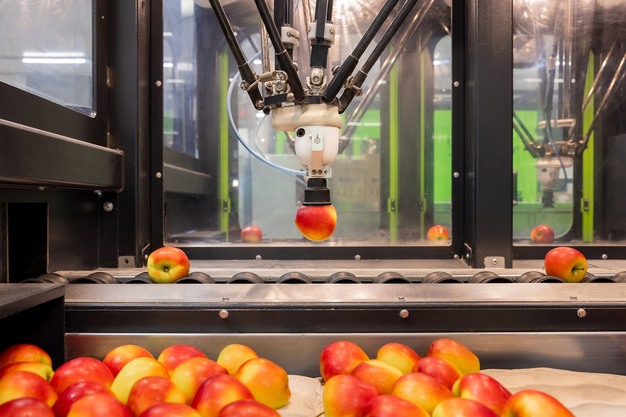
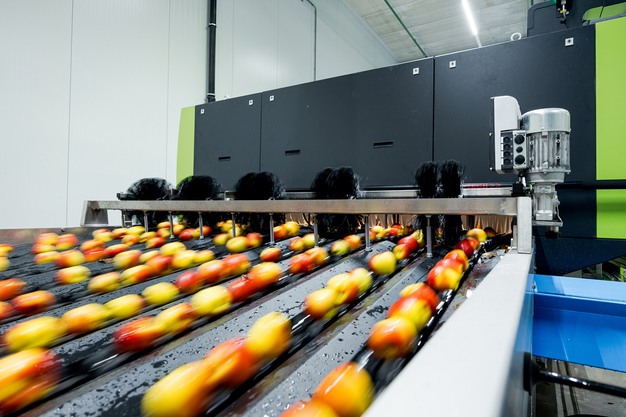
"In light of all the geopolitical and crop-related challenges, I think we can look back on the year with a certain degree of satisfaction. Looking back is fine, but of course, it is about the future, and that received a major boost in 2025 with the completion of our Smart Fruit Hub. Turnover of 306 million euros is half a per cent higher than last year, approaching our record turnover of 2024. This is quite an achievement in a year that saw the launch of the Smart Fruit Hub and the phased relocation of production lines to it. We see that we are maintaining a good operational result despite all the external challenges. Labour costs, in particular, increased sharply. For instance, we faced collective labour agreement increases of 3% in January and another 1.1% in July. The costs of temporary workers, which our growers also face, have also risen sharply in recent years. However, through automation in the Smart Fruit Hub, we are already managing to partly cushion these increased costs.
 © Fruitmasters
What has the start-up of the Smart Fruit Hub been like? Were there many teething problems?
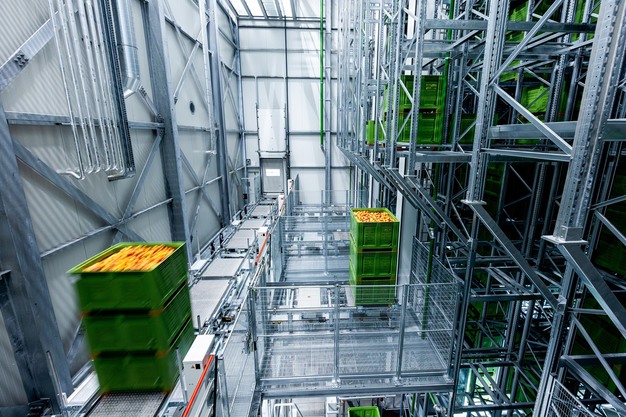
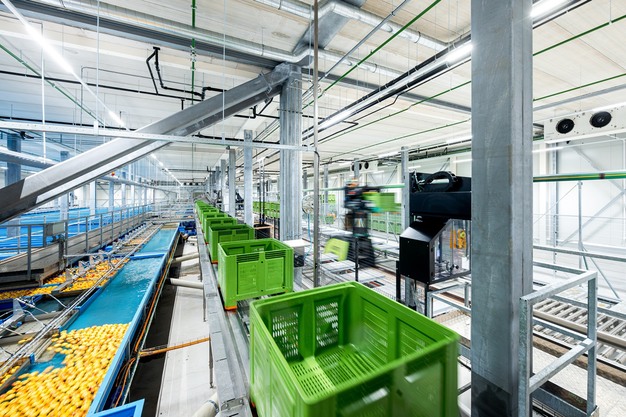
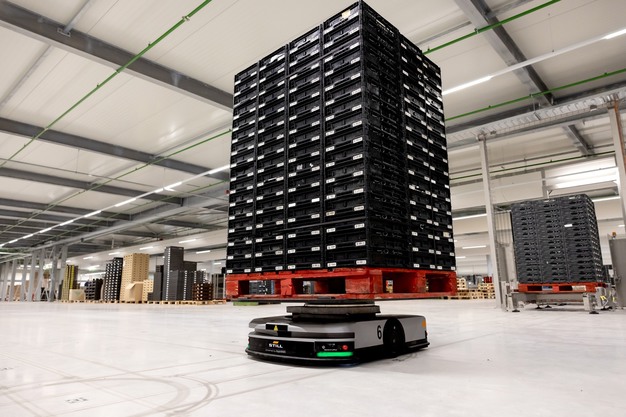
You always have some, but I must say that the new technologies, such as the unmanned trucks and the high-bay warehouse, have caused relatively few problems. With the existing technologies, we did have quite a few hiccups. We went live in May, just ahead of the holiday period, and that, combined with a somewhat different workforce, caused some teething problems. However, these have largely been resolved today. The realisation process was also completed within the target time and budget. When you see how we achieved this with our growers, customers, and colleagues while operations continued, I cannot help but be satisfied.
For growers, the Smart Fruit Hub was quite an investment. Are there still many discussions about that?
One of our tasks as a cooperative is to take the lead to some extent and determine the direction through consultation. We received a 'yes' from the growers and started implementing it. Looking at the volumes today, I think we can all be very pleased that we took this step. As a result, there is little or no discussion anymore; it has instead given way to a sense of pride.
 © Fruitmasters
How is your membership developing?
We see the challenge in the demographic developments that will confront our membership with the well-known succession issues. In addition, land is becoming increasingly scarce in the Netherlands. We are seeing land positions shift, with fruit-growing land also disappearing. That worries me quite a bit.
You see that greenhouse strawberry cultivation, for example, is growing mainly among growers who have organised their sales elsewhere. How do you explain that?
On the one hand, it has to do with consolidation on the marketing side, which is taking place in the main sales channels. There is a response to that on the supply side, which is also consolidating. They also want to invest more decentrally. As you know, we have opted for central control of the subsidy channel. Underlying that is a shared plan that runs until 2029. Looking at the SIG&F discussion today, you can assume that there will be adjustments. Fortunately, we have approval until 2029, unlike other producer organisations that have to seek approval annually.
Would you like to become more active in cultivation abroad?
For us, Dutch cultivation remains the primary source. At the same time, we cannot push internationalisation aside either. For instance, we see that, climatologically, the seasons, especially in soft fruit, are becoming shorter and shorter. Blueberries, in particular, but also raspberries, are examples of this. Because we still advocate maintaining our source position, we will certainly not close our eyes to opportunities abroad. Our motto that a deal is a deal with our customers is sacred, so we will have to take steps in that direction. This can be done in various ways, preferably through our own members or through an established, growing company abroad that becomes a member of our cooperative.
Is the whole geopolitical situation changing your cooperation with your customers?
I think we are fortunate to have had partnerships with our customers for many years. On the retail side, you can see that all sorts of things are going on. It has been unsettled there for years, with 2025 as a clear example. Add the whole geopolitical situation to that, and you have to work together to find the right quality and availability of the product. So far, we have succeeded in this to a reasonable extent, but we also understand the pressure on our sales partners. Just as insurers always talk about 'external calamity', we also have to deal with that. Both our marketing partners and consumers will also have to get used to the fact that availability is more than just a word. Who could ever have thought that we would again be discussing whether fuel is available for the car? But today it is an issue. Of course, over the past few decades, we have been brought up with the idea that everything should always be available.
In terms of markets, do you see any major developments among risers and fallers?
We see our growth in foodservice and ingredients continuing. Despite many consumers having less money in their wallets or feeling that way, the convenience aspect remains important. This also has to do with the generational change that is taking place. Boomers and Gen Z have completely different eating patterns and eating habits. It is up to us to serve both the current and future generations of consumers. With our portfolio of varieties, we also have the capabilities to do so.
Pears were followed by the first export of Tessa apples to China. What do you expect from this?
When the first container of apples arrived in China, it was a milestone after an indescribably long and intensive journey. Now the doors are open, and we have to see how we can expand exports further. Quantitatively, of course, it is a huge market, but we have to see how it develops. With all the markets out there also closed, it remains necessary to explore alternatives together, especially if we cannot turn domestic apple consumption into an upward trend. In this respect, we had also expected some more positive impulses in the coalition agreement, but I personally missed them. The new coalition has only just taken the field in the new formation of a minority government, so it should be given a chance to do so, but what I have seen now does not fill me with hope. The knowledge of fruit in the Netherlands is so great. I had hoped to see more of this in the agreement. It is easy to talk about low-skilled labour, but these are the ladies and gentlemen who are here picking and packing fruit. Please, let us not go the way of fishing!
How is your organic branch doing?
I am still glad we took this step. Last year, we held our organic symposium at Mariënwaerdt, with a good turnout and discussion. We have still been able to attract growers today, although conversion remains a challenge. Added to this is the pressure on margins on the sales side, but we see high organic ambitions among our customers, and we are still eager to contribute.
 © Fruitmasters
The crop protection package hangs over growers like a sword of Damocles. How do you deal with that as a cooperative?
We are not primarily an advocacy organisation. But that does not mean we do not make our voice heard. We do so visibly by participating in various consultations, but also less visibly through lobbying. It is an issue that has been playing out in the market for years, with the bitter reality being that we are dealing with an uneven playing field that is not going to become level either. I think it is more important than ever for us as fruit growers, including FruitMasters and its growers, to keep telling the world what we are all about, and not fight every battle against certain publications. That battle takes a lot of energy, and you will not win, as the past few years have shown. But when I saw how many walkers took part in the Betuwe Blossom Walk here recently, and how many people queued up to eat our strawberries and Kanzi apples, we have a great story to tell about a healthy product.
But are those above-legal MRL requirements from your customers still viable in the future?
I do not know whether they are sustainable, but they are set, and we will do our utmost to meet them. The future will show whether that is sustainable. The past has also shown that we are capable of a great deal. There is so much resilience in the sector, among growers, and in our cooperative, and we have to act from there.
On the retail side, there has been substantial consolidation. Is supply bundling still a topic for you? Or is that somewhat at a standstill after the talks with Coöperatie Hoogstraten?
Cooperation in general is one of the most important conditions for fruit growing to maintain a prominent place in the Dutch economy. That applies on the supply side, on the marketing side, and everything in between, especially when viewed in the international playing field. So if bundling opportunities arise, we will certainly explore them. Not today, but what is not today may be tomorrow. We will also have to seek each other out as producer organisations, and sometimes we will have to put reason above emotion. That is not always easy, but it is important.
 © Fruitmasters
How is your wholesale branch doing? Have you been able to retain the clock buyers from the past?
The clock will always remain an emotional subject. That is why, last year, together with our members, we took another look in the mirror to see whether we handled the discontinuation of the clock properly. The overall conclusion from that review was that it was a good move and that we should not necessarily return to clock sales. We have therefore left the feeling around the clock behind for a couple of years now. We have seen a strong increase in new wholesale customers since the start-up of FruitMasters Wholesale, and we are well on our way. This is also how it is perceived by our growers. This also creates a different buying public.
You are one of the initiators of the Fruit Tech Campus. Is it true that money still has to be added every year?
We are indeed one of the founders of the Fruit Tech Campus and are therefore also part of the current board. The great thing about this initiative is that basically everyone thinks it is a wonderful initiative that brings entrepreneurs, education, and innovation together. There is also a fair amount of activity, but at the same time, here too, the chimney has to smoke. And that turns out to be a very difficult story. Getting growers to participate through membership turns out to be a challenge. We continue to think it is a good initiative in principle, but if you look below the line, it cannot continue in this way.
 © Fruitmasters
2025 was also the kick-off of the Sonrosa strawberry, grown from seed. How did that turn out?
Thanks to an updated cultivation system, Sonrosa enables stable production and gives growers more control over the season. Everyone can see its potential. But this is mainly a matter of time. I think Sonrosa has proven itself in many respects and can be very successful in the market, but before real volumes are available, that will take time. Many breeders are active in soft fruit production. We ourselves have started working at full speed with the Rubin Raspberry, which has been named Yumio.
What are the dots on the horizon for you personally in the coming year?
Big issues are coming at us today, such as the diesel price, the discussion around crop protection products, and the interplay with our customers. Many things we cannot influence, which is why we should focus on the things we can influence. For us, operational excellence, to use a fancy term, has to be top of mind. For instance, I would like to make the Smart Fruit Hub even more efficient, and also think about the development of growing farms with growers. We are also continuing full force with variety development. We have a great portfolio with the Sonrosa strawberry, Yumio raspberry, the apples Bloss, Tessa, and Morgana, and also Kanzi as the second apple brand in the world.
Do you deliberately not mention the Migo pear? And do you see opportunities for concept varieties in pears?
To be fair, Migo has not delivered the success we had hoped for in the Netherlands, but there is a market for it in other export markets in Europe. So we do everything we can to support Migo, both with our customers and growers. Besides that, of course, we are always scouting for an alternative pear variety, but it is not there for the taking; we would have already introduced it. But we certainly keep our ears and eyes open.
Does FruitMasters have any other new plans?
Regarding our services, we might well make even better use of every square metre we have available, such as by providing services for third parties or processing counter-cyclical produce for which we already have the machinery.
 © Fruitmasters
Just last year, you called for some more Amsterdam pride within the cooperative. Have you achieved that yet?
I live between Amsterdam and Utrecht, so I take a bit of both. Head up and chest forward is an attitude I like. With me, the glass is basically always half full. Fortunately, we are well in control. This is reflected, for instance, in our operating results, staff numbers, and absenteeism figures. At the same time, we should not deny the developments in the world and in our immediate surroundings. All in all, the challenges are really big, and I think we need to realise more than ever that the world cannot be made, and that we should not say too easily that every zeitgeist has its challenges.
 For more information:
FruitMasters
Deilseweg 7
4191 NX Geldermalsen
Tel: +31 (0) 345 578800
[email protected]
www.fruitmasters.com