The Price Board of the Agricultural and Fruit and Livestock Market of Castilla-La Mancha has highlighted the importance of aligning supply with demand and spreading planting schedules to minimize the risk of sharp price fluctuations that could cause a price collapse. They advise growers to be very cautious and to plan future plantations carefully, considering the volatile prices and increasingly unstable markets. Given this situation, they stress the importance of responsible action, focusing on thorough planning, professionalism, and market understanding. "The key is not to produce more, but to produce better and with a guaranteed outlet," they stated.
 © Asaja Ciudad Real
The Price Board estimates a nearly 5% decrease in the watermelon surface area compared to 2025. However, rainfall in the first quarter has prompted some growers to consider new plantations in specific regions. Since watermelon cultivation demands a substantial initial investment, many growers are currently seeking financing options.
The melon planting area is projected to stay stable. The proportion of piel de sapo melon is expected to be similar to last year, and about 30% of the total melon cultivation in the region is anticipated to consist of other varieties primarily aimed at export, including Amarillo, Galia, or Cantaloupe.
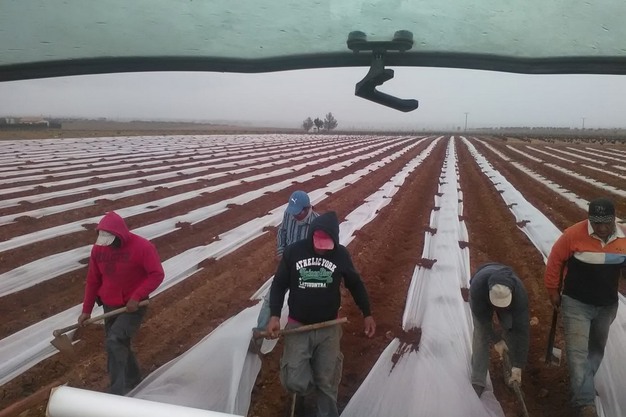
Growers in Castile-La Mancha are beginning to prepare the land for the initial melon and watermelon plantings, with the first mulch expected to appear in the fields soon. It is estimated that around 10% to 15% of the crop will be planted early, employing mulching with a thermal blanket.
Currently, crop development is proceeding normally, but the Price Board warns of potential overlap in production due to changing climatic conditions. In competing regions like Murcia, if the weather remains favorable, production might partially coincide with the markets. The harvest in Castile-La Mancha is expected to begin between July 10 and 15.
There is also a general increase in production costs of 5% to 10%.
The market has been supplied through February mainly by produce from Brazil, with Senegal now being the primary source. From mid to late April, greenhouse produce from Almeria will begin to enter the market, signaling the start of the transition to the domestic season.
For more information:
Asaja Ciudad Real
www.asajacr.com