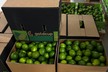
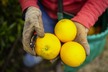
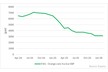
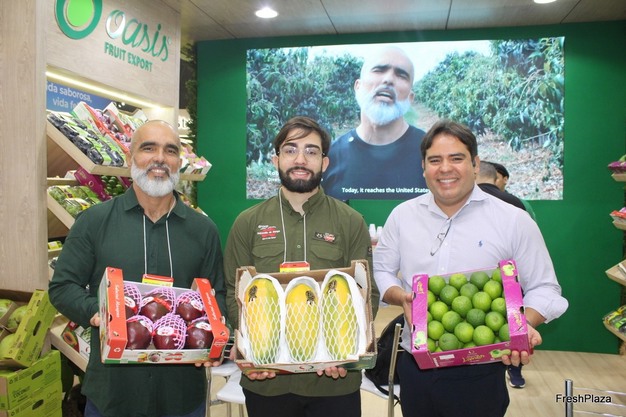
A key highlight of the current season has been the behavior of lemon prices in the European market. Ronaldo Araujo, CEO of Sebastião da Manga, remarks, "This is not normal," pointing to the winter price levels. "In January, lemon prices in Europe hit 14 euros, a record high. Today, prices remain above typical seasonal levels, exceeding 7 euros, which underscores the exceptional nature of this season," he stated.
 © Diana Sajami | FreshPlaza.com
The executive attributes this situation to a combination of demand and supply factors, though he admits he's not entirely sure: "I don't know what has happened, but we are receiving orders from everyone." He anticipates this trend will continue and increase in the upcoming months, especially during the European summer: "We believe that prices will rise in the coming months, mainly from May onwards."
 © Sebastiao do Manga
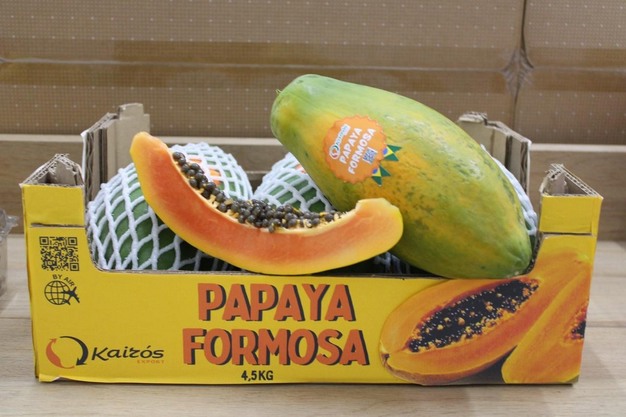
Meanwhile, Brazil is expanding its export portfolio, with papaya, a recent addition, gaining popularity in markets like the United Kingdom, Portugal, and Argentina. "We started producing it last year, and we believe it will grow significantly due to high demand," Araujo stated.
 © Sebastiao do Manga
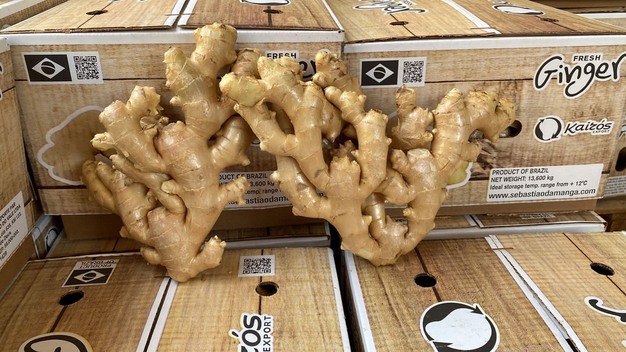
Ginger is another product with a positive outlook, potentially benefiting from logistical challenges in China. "I believe it will be a good opportunity for Brazil," he stated, emphasizing the competitive edge in transit times: shipments from Fortaleza can reach Europe in only seven days, benefiting the product's quality.
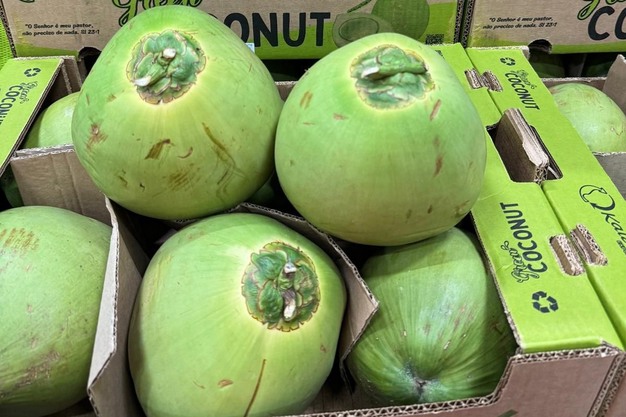
The coconut market is also evolving, with increasing exports to Europe and South America. Araujo mentions that this segment is still growing: "It is a market that we are still developing."
 © Sebastiao do Manga
Regarding mangoes, one of the company's main products, Brazil has a natural advantage: year-round production. Thanks to the planning of its farms in the San Francisco Valley, the company can stagger the harvest weekly. "As we have 750 hectares, we spread it out so that we can produce 12 months of the year," explains Araujo.
In addition to strengthening its presence in mango production, the company is advancing in crop diversification. One of the latest initiatives involves cultivating pomegranates, with plantations already in progress. Araujo points out that this crop could be harvested year-round: "Trials in Brazil indicate we can produce it all year, much like lime." However, it is expected that profitability will begin from the third year.
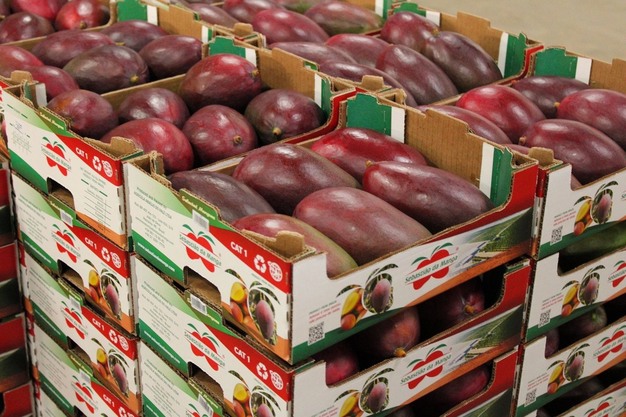 © Sebastiao do Manga
The global situation presents challenges. Rising logistics costs, driven by geopolitical factors, are already affecting operations. "Prices are starting to change, to rise," warns the executive, citing recent increases in transport tariffs.
On the production side, weather remains a persistent challenge. Rainfall, frequent in the first half of the year, can affect mango export quality. To combat this, the company has adopted technological solutions. "Two years ago, we replaced tractors with drones for spraying," Araujo stated, which has decreased losses and boosted field efficiency.
 © Sebastiao do MangaFor more information:
Ronaldo Araújo
Sebastião da Manga
Brazil
Tel: +55 21 98458 1439
Email: [email protected]
www.sebastiaodamanga.com