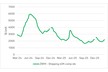
The Belgian transport sector is under severe pressure. Diesel prices have risen sharply since the beginning of March 2026, driven by recent geopolitical developments in Iran, increasing by almost 35% since early March and more than 42% since January. For companies in the sector, where margins are already thin, this has a direct impact on liquidity and operational costs.
Febetra is sounding the alarm. "We are very concerned. The various diesel price increases this month are having a major negative impact on transport costs, which have risen by more than 6%. There is no option but to pass this increase on to customers. Hauliers simply cannot absorb these costs themselves, as the average profit margin in the transport sector is around 2%," said Isabelle De Maegt of the Federation of Belgian Hauliers.
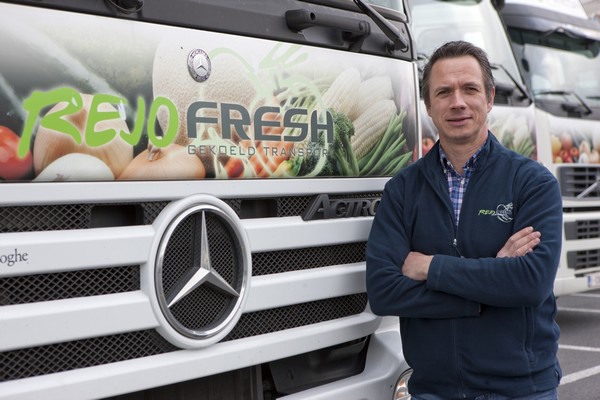
Johan Chrétien of transporter Rejo Fresh agrees that there is no alternative. "Our diesel costs have increased sharply, directly affecting our overall cost price. A 6–7% increase in transport costs completely wipes out our margin. In our industry, we simply do not have that buffer. We are therefore forced to pass these additional costs on to our customers. It is not a choice, but a necessity."
Johan stresses that passing on these costs is strictly about covering expenses, not generating profit. "Fuel surcharges provide some relief, but they lag behind reality. Without adjustments, our liquidity will come under significant pressure."
Unprecedented wave of bankruptcies
Due to the continued diesel price increases, Febetra is calling for a postponement of the planned kilometre charge increase in Flanders. "Otherwise, an unprecedented wave of bankruptcies is likely," Philippe Degraef, director of Febetra, warned earlier at Flows. Margins in the transport sector are traditionally extremely thin. "The rapid succession of steep diesel price increases is becoming dramatic, even for companies that apply a diesel clause."
He argues that while the Flemish Government has no control over oil prices, it can provide relief by postponing the planned sharp increase in the kilometre charge on 1 July, which is set to rise by 40 per cent for a standard EURO 6 truck. "Many hauliers are already struggling to stay afloat. Flanders has everything to gain from keeping its transport companies financially capable of supporting the economy and society."
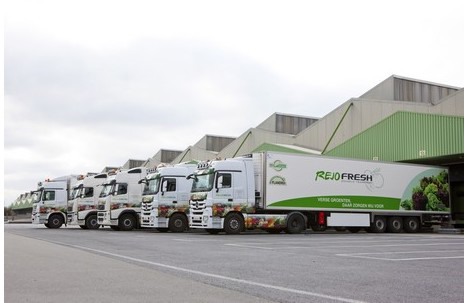
Johan does not expect the pressure on the sector to ease in the near term. "The unrest in the Middle East appears likely to continue for some time, which means the pressure on the sector will persist. For companies like ours, this requires constant balancing between cost pressures and maintaining customer relationships."
Support measures requested
Michaël Reul, secretary-general of interest group UPTR, expressed concern about the situation. "Today's increase makes it even more difficult for carriers to pass these rising costs on to customers. The war in Iran forces us to propose a series of measures to help carriers get through this challenging period."
Among other measures, UPTR is calling for the professional excise duty of €56.32/1000 litres to be reinstated, along with the difference between the Belgian excise rate and the European minimum (€22.54/1000 litres), either through professional diesel or directly at the pump. The federation also wants the professional diesel scheme to be extended to vehicles over 3.5 tonnes, for NSSO contributions and withholding tax on staff availability, waiting time, and night bonuses to be exempted, and for "direct claim" to be expanded so subcontractors can recover invoices directly from the shipper or consignee.
In addition, UPTR is calling for strict monitoring by the FPS Economy and Mobility of principals who abuse their dominant position to force carriers to operate at unsustainably low rates. "We urge political leaders not to overlook the catastrophic long-term economic consequences. Without action, many SMEs in the transport sector face serious risk," Michaël warned.
For more information:
Johan Chrétien
Rejo Fresh
Oostnieuwkerksesteenweg 101
8800 Roeselare, Belgium
+32 51 25 44 72
[email protected]
www.rejofresh.be