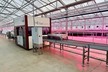
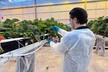
"If you want to make an impact in the market, you have to compete with outdoor lettuce," says Marco de Bruin, co-founder of Lettuce Lead. That statement formed the starting point for the development of an automated deep float cultivation concept aimed at positioning greenhouse-grown lettuce alongside field production in terms of output and cost structure.
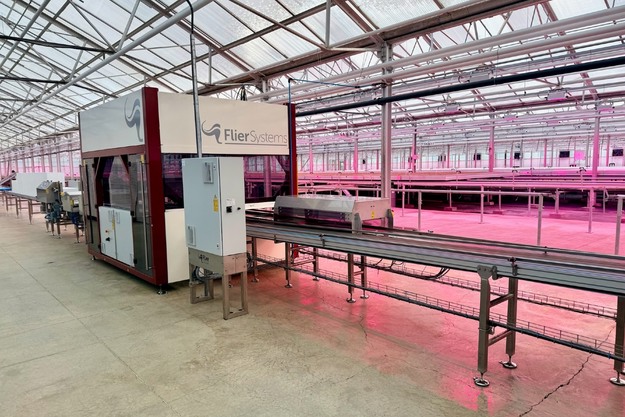
Currently, the system is installed in a New York greenhouse. "With recent developments in automation, we are now at a point where our customers can compete with outdoor-grown lettuce, " added Ad Kranendonk, Commercial Director at Flier Systems, and responsible for the automation in this quest.
 © Arlette Sijmonsma | FreshPlaza.com
Improve to compete
The collaboration began with trials in 2021, focusing on yield improvement and spatial optimization. "We started looking at how we can improve production yields so that we can better compete in the market," Marco explained. "Not exactly on cost parity, but close enough to have an impact."
The result is a proof of concept at Berkshire Produce in New York, where performance is measured on a grams-per-mole basis. According to Marco, this approach allows for comparison across greenhouse types and light levels. "If you look at grams per mole, you neutralize any greenhouse operation. Whether there's 100 micromoles of supplemental lighting or 400, we just look at how many grams per mole we can get out."
The system is designed to handle multiple product segments within the same float infrastructure, including baby leaf, teen leaf, mini heads, and full heads. "It gives us the flexibility to program the transplant however we want. You can grow all these products in the same place," he said.
 © Flier Systems
 © Flier Systems
High-density propagation and staged production
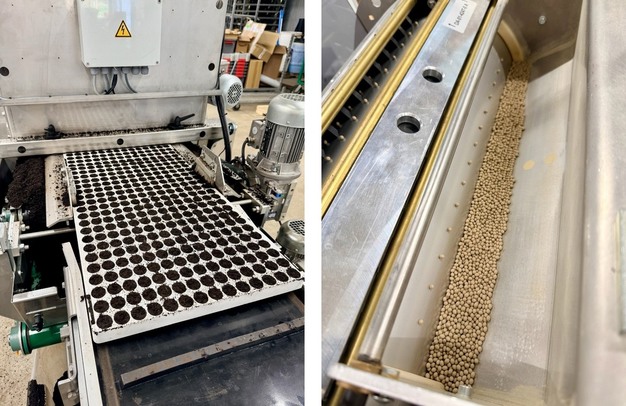
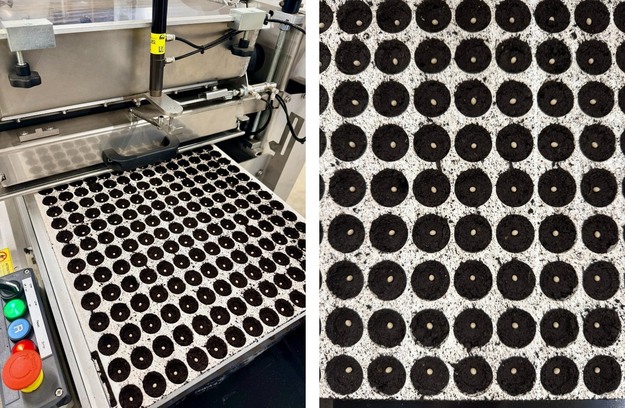
Unlike traditional deep water culture systems, where the entire crop cycle is completed on ponds, the concept separates the high-density and finishing phases. The first stage takes place in a pre-formed 280-count tray, loose-filled with substrate. Sowing is carried out with a Flier seeding line, applying water, fertilizer, and seed in one pass. Germination takes two to three days.
"We grow roughly half of the crop at high density in a plastic tray developed with Triple Green Innovations, and the other half in the ponds," Marco said. "That combination gives us a density you can vary depending on the lettuce type."
After the initial phase, plants are transplanted into the deep float system, where finishing densities can range from approximately 280 in reality plants per square meter to 50–60 plants per square meter for mini heads.
Yield metrics and light use
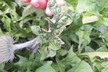
Production at the New York site started in an existing greenhouse. According to Marco, organic romaine heads reached weights of around 440–450 grams. Baby leaf varieties such as Cristabel averaged 11–12 grams per mol, while other varieties achieved approximately 16.5 grams per Mol.
Total annual yield depends on the available light sum and operational strategy, with figures reported between 130 and 139 kilograms per square meter. At the time of reporting, the greenhouse was operating at approximately 15 mol per day.
"There is no difference in organic or non-organic from a technical standpoint," Marco noted. "Right nutrients, micronutrients, and pH control are the biggest factors."
 © Flier Systems
Automation and labor dynamics
Labor availability played a role in shaping the system design. According to Marco, plant handling volumes require mechanization.
"If you have to move 200,000 plants per hectare per day, seven days a week, and you're growing at 25 mol per day, you cannot do this by hand," he said. "If you suddenly need to transplant 800,000 plugs per day manually, good luck."
Automation enables density shifts and supports continuous transplanting. The high-density tray stage runs for approximately 11–12 days with three watering groups operating automatically. Transplanting is less dependent on plug moisture content, provided substrate consistency is maintained.
System choice and risk profile
The decision to work with a deep float system rather than gutters was based on system simplification and capital expenditure considerations. "When you look at different systems, gutter systems are like Formula One cars," Marco said. "They are higher capex. With the cost of capital where it is, you have to evaluate that."
He estimated that a fully automated deep float system represents around 65 percent of the capital cost of a comparable gutter system. While production levels in gutters can be higher, the evaluation centers on margin and risk profile. "It's an evaluation of how much risk you are willing to take," he said.
The greenhouse supplies certified organic lettuce to a processor serving the US Northeast market. According to Marco, greenhouse production is positioned to offer a local and organic supply, while open-field production remains established. "Field grown is a well-established competition," he said. "Greenhouse CEA will play a role in certain segments, but open field production will remain."
For more information:
Flier Systems
[email protected]
fliersystems.nl
 © Flier Systems