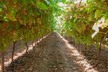
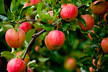
Qul Fruits has launched a plantation program to plant about 1.5 million high-density apple trees in Kashmir, India, in 2026. According to officials associated with the initiative, planting will take place in phases across the region and is expected to be completed by the end of April 2026. The project is part of efforts to expand high-density apple farming, a system promoted as an alternative to traditional orchards.
The company is also exploring horticulture expansion outside Kashmir. Plans include plantation projects in Bhutan and in the Northeast region of India in 2026, with crops such as cherry, pear, kiwi, and blueberry under consideration. The approach focuses on introducing fruit cultivation systems based on high-density planting in regions with suitable agro-climatic conditions.
Apple production forms a central part of the horticulture sector in Kashmir. Official data indicates that the region produces more than 2 million tons of apples annually, sometimes reaching 2.5 million tons. Around half of the population is directly or indirectly linked to apple cultivation, while horticulture contributes about 9 to 10 per cent to the Gross Domestic Product of Jammu and Kashmir and generates around 8.5 crore man-days of employment each year.
Much of the apple production in Kashmir still relies on conventional orchards. In traditional systems, around 250 apple trees are planted per hectare. High-density orchards can accommodate up to 3,000 plants per hectare.
Yield levels also differ between the systems. Conventional orchards generally produce 10 to 15 tons of apples per hectare, while high-density plantations can produce 50 to 70 tons per hectare within the first years after planting under proper management.
High-density orchards also reach fruit production earlier. Traditional apple trees usually take 15 to 20 years to reach full production, while high-density plants can begin producing fruit within two years and reach full production by the fourth or fifth year.
The shift toward high-density planting has expanded in Kashmir during the past decade. The first high-density orchard in the region was introduced in 2014, and growers have since been encouraged to adopt the system through subsidy programs and technical support.
Under government programs, orchardists converting to high-density plantations may receive subsidies of up to 50 per cent, with additional financial support available through financial institutions.
High-density orchards rely on management systems that include defined spacing, trellis structures, drip irrigation, and fertigation. Practices such as pruning, canopy management, nutrient scheduling, and integrated pest management are used to support plant growth and fruit uniformity.
High-density apple varieties grown in Kashmir include Gala Schinico Red, Gala Mema, Gala Bedin, Gala Redlum, Mema Mestar, King Roat, Jeromine, Fuji, Granny Smith, and Golden Reindeers.
Source: Kashmir Reader