The Polish apple season has entered a difficult phase, says Jakub Krawczyk, export manager for Polish apple exporter Appolonia: "Stocks are still relatively high, while sales remain slow and many destinations are not accepting the prices that are currently being offered. Normally at this time of the year, the market should move more smoothly, but from our perspective, it's currently quite challenging to reach some clients and close new deals."
It's not all bad, though, as other markets are stepping up to buy more of the Polish apples, Krawczyk states. "One positive sign is that Eastern markets, such as Kazakhstan and Belarus, have recently started loading larger volumes. There is also a big question regarding how the Egyptian market will react to recent geopolitical events. In February, Egypt was still the number one destination for Polish apples, according to phytosanitary certification data."
 © Appolonia Sp. z.o.o.
At the moment, the geopolitical situation is affecting Appolonia's business mostly in a negative way, Krawczyk says: "Fuel prices have increased significantly, and nobody knows when this increase will stop or whether governments will introduce any protection mechanisms. This comes at a particularly difficult moment because growers are now starting the intensive spring work in orchards, which increases fuel consumption. Exporters who have shipments heading to Gulf markets, such as the UAE or Qatar, may also face complications, as shipping routes could be delayed or rerouted. If costs continue to rise, importers may struggle to maintain their selling prices. Meanwhile, the EU market is very saturated with apples."
According to Krawczyk, demand for a certain variety is already weakening as other origins enter the market. "Red Delicious remains a popular variety across most export destinations. Demand for Gala appears to be weakening, and offers from growers are starting to decline. Gala from South Africa has already entered the Indian market. The competitiveness of the EU Gala will likely decrease once more Southern Hemisphere suppliers begin shipping to Asia, which usually happens from late March to early April. Additional complications in shipping to markets such as the UAE or Qatar could also result in some Gala orders being cancelled or postponed."
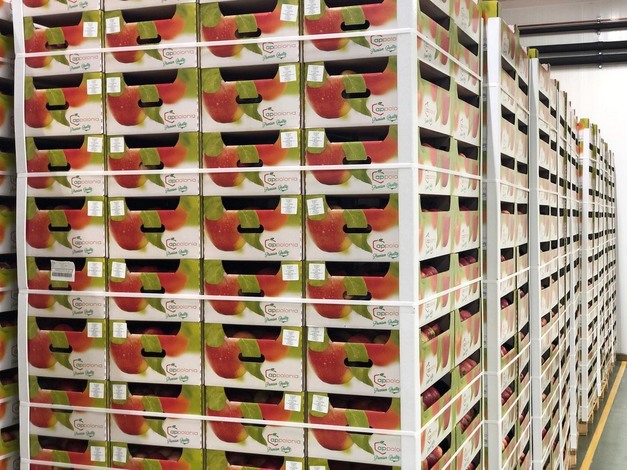
"Currently, there is very good availability for the Red Jonaprince variety, with plenty of volumes still in storage. Stocks of Golden Delicious are also strong. There is still Idared stored in ULO chambers, but many growers are reluctant to open them at this stage. In our opinion, it's safer to open chambers when there is a confirmed client for a specific variety. This season in particular, it's difficult to be sure that buyers will not change their plans in the coming weeks and stop loading certain varieties."
 © Appolonia Sp. z.o.o.
At this point in the season, Appolonia is seeing the average prices for apples go down, rather than up: "More and more companies are lowering their prices, and we may have to follow this trend as well. Shipment volumes are currently smaller than usual for this time of the season, and in order to secure orders, exporters often need to adjust to buyers' expectations. Earlier in the season, many people expected prices to increase in the second half, but so far, we are seeing the opposite trend. We hope that the conflict in the Middle East will not cause further disruption to the market. The apple sector, like many other industries, is very sensitive to developments affecting oil prices and global logistics," Krawczyk concludes.
For more information:
Jakub Krawczyk
Appolonia
Tel. +48 785 342 930
[email protected]
www.appolonia.pl