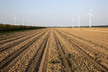
Farmers in Australia are monitoring fertiliser supply as the conflict involving the United States, Israel, and Iran affects global urea trade. The Middle East supplies up to 45 per cent of the world's urea, which is widely used as a nitrogen fertiliser for crops such as wheat and vegetables.
Australia does not produce urea domestically and relies largely on imports. Shipments have slowed as the conflict disrupts shipping through the Strait of Hormuz.
Luis Gazzola, director of Gazzola Farms on Victoria's Mornington Peninsula, said fertiliser costs have been rising in recent years.
"Prices have been going up for the last four years. Our cost of production has gone up 25 per cent or more," he said.
"But our returns and our produce, fruit, and veggies, haven't gone up, unfortunately."
National Farmers' Federation president Hamish McIntyre said fertiliser costs are increasing.
"Fertiliser prices are already climbing, with urea now sitting at around US$584 a ton, up nearly 30 per cent in the past month and more than 50 per cent higher than a year ago," he said.
"That's deeply concerning as farmers prepare for winter cropping, because tightening supply and soaring costs could mean fewer crops planted and ultimately higher food prices."
Robert Brooks, professor of econometrics and business statistics at Monash University, said the impact on consumers will depend on how quickly supply chains recover.
"A lot of primary production is already operating with fairly tight margins, and they're also operating in a situation where the planting and the growing cycle are seasonal, and so there are certain times where this becomes really time-critical," he said.
"On the grocery price chain end, transport then becomes a bigger part of infrastructure, so the longer you get disruption, and the longer you get higher oil, petrol, diesel, and urea prices, the more you get price stickiness."
In a research note, Commonwealth Bank said the crisis could last months and may affect agricultural production this year. Economist Dennis Voznesenski said some farmers have fertiliser purchases secured but not delivered.
"While some of the best prepared farmers have most of their fertiliser needs purchased for the year, many don't have it delivered onto their properties, leaving them at risk of future supply shortfalls due to shipment challenges," he said.
Source: 9News