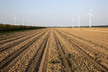
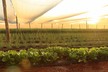
After several years of drought pressure, Morocco's 2025-2026 agricultural season is showing signs of recovery following higher winter rainfall. Conditions across multiple production regions have improved, affecting cereal crops and orchards.
According to the General Directorate of Meteorology, the national average rainfall between December and February reached 136 mm. The seasonal norm is 71 mm. This winter ranks as the third wettest since 1981. Dam fill rates increased from 27.6% to 70.7%. A total of 37 reservoirs exceeded 80% capacity, and 13 reservoirs have already overflowed. Water inflows reached 13.87 billion cubic meters, which is 130% above the national annual average.
Cereal crops remain a major component of Morocco's agricultural production. Current crop development is taking place during the ear formation stage. Mohamed Taher Sraïri, professor at the Hassan II Agronomic and Veterinary Institute, said in a statement to news outlet le360: "We are now in the ear-formation phase. This is the decisive moment. A large share of the final yield is determined at this stage."
Rain-fed production areas are expected to benefit from soil moisture levels that support continued crop development without hydric interruption. Estimates for cereal production vary between 6 and 9 million tons depending on the source.
Satellite vegetation indices show improved crop conditions nationwide. NDVI readings indicate vegetation growth across the country. Forage crops, including oats and triticale, are developing, while the cultivation of legumes such as broad beans has expanded. Spring-flowering fruit trees, including peach, nectarine, and apricot varieties, are currently in bloom.
Weather events during the season have also affected some areas. Flooding in the Gharb and Loukkos regions damaged citrus and soft fruit crops. These losses are difficult to recover in the short term.
Climate projections for Morocco indicate that water resources could decline by 20 to 30 per cent by 2050. Researchers and industry observers point to the need to adjust agricultural planning, crop selection, and irrigation strategies to long-term water availability.
Source: The North Africa Post