The logistics situation resulting from the unrest in the Middle East is, according to Steve Alaerts of Foodcareplus, "particularly complex and rapidly evolving." He says the impact on the food industry, and particularly on the fresh produce sector, is already being felt.
"Due to the invocation of end-of-voyage clauses, thousands of containers will not arrive at their originally planned destination," he explains. "They will necessarily be unloaded in so-called 'safe havens'. On paper, these are fallback options, but in practice, they often do not provide market access for the products in the unloaded container."
Fresh produce destroyed
This means that fresh fruit and vegetables are being unloaded, but can hardly be marketed locally, if at all. Moreover, transit to the intended final market is far from guaranteed. "Alternative routes are limited, expensive, and operationally complex. Returning is not a realistic option for most fresh produce products, possibly with onions as an exception, and in the worst-case scenario, destruction is imminent if transit proves impossible or if quality and compliance can no longer be guaranteed."
 © Foodcareplus
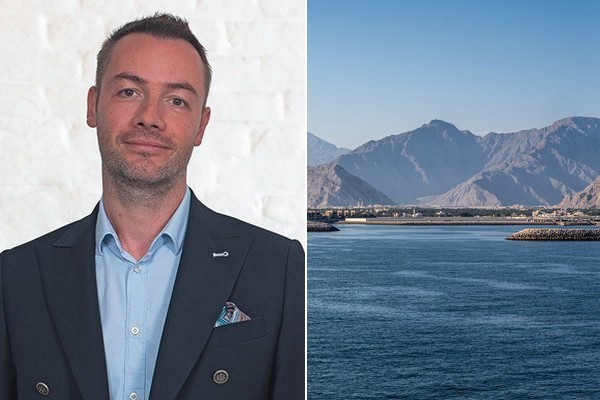
For ships already close to the Gulf, Steve expects unloading to take place mainly in Oman and on the east coast of the United Arab Emirates, particularly in Khor Fakkan. "From there, despite additional costs and formalities, it is still relatively feasible to move certain volumes to destinations within the UAE."
For shipments with Qatar, Kuwait, and other markets in the region as their final destinations, the situation is considerably less favourable. "Diversion ports do not automatically provide access to those markets, and transit options are often limited. Each additional step means extra transshipment, further delays, higher costs, additional administrative barriers, and an increased risk of quality loss."
Diversion to India and Sri Lanka
Ships farther from the Gulf may divert to destinations such as India and Sri Lanka. "You can imagine what happens when fresh fruit and vegetables are unloaded en masse in such hubs. The options to still get that cargo to its original final destination correctly, on time, and compliantly are then extremely limited."
Each additional hub increases the complexity exponentially, according to Steve. "It is not just about transport planning, but also about access, documentation, phytosanitary requirements, customs formalities, timing, and quality risks. For fresh produce, where shelf life is crucial, the clock is ticking relentlessly."
Ripple effect on capacity and tariffs
In addition to the immediate disruption, Steve points to broader ripple effects. "The logistics chain had not yet fully normalised after previous disruptions. This new disruption will spill over into equipment availability, capacity, lead times, and rates."
The uncertainty surrounding deliveries remains high, but the financial impact is at least as significant. "The additional costs will once again fall mainly on growers, shippers, and exporters. They bear the greatest risk in a chain where margins are already under pressure. Behind the scenes, this also translates into considerable human pressure. Logistics teams are once again being pushed to their limits to find solutions in a situation that changes daily. The resilience of producers and exporters is under severe strain, while logistics experts are expected to make the seemingly impossible possible time and again."
Hustle
At Foodcareplus, efforts to find concrete solutions for diverted shipments are already well underway. "We are focusing on cross-dock solutions and transit within the Gulf Cooperation Council (GCC) to move goods as close as possible to their original destination," Steve says.
He notes that this is a significant challenge under current circumstances. "It is not just about transport. We must simultaneously consider market access, documentation, compliance, timing, and quality maintenance. Nevertheless, together with our partners, we continue to search for workable routes to minimise the damage to our customers."
How long the blockade and tensions around the Strait of Hormuz will continue remains uncertain. According to Steve, what is certain is that the fresh produce sector is facing another major stress test. "The chain is resilient, but not indefinitely elastic. Every additional day of uncertainty comes at a price."
For more information:
Steve Alaerts
Foodcareplus Logistics
Oudeleeuwenrui 25
2000 Antwerp, Belgium
+32 3 242 91 50
[email protected]
www.foodcareplus.com