The outbreak of war in the Middle East last Saturday and the return of the crisis in the Red Sea came as a dismay to Egyptian orange exporters, who had been eagerly awaiting the start of March. Mostafa Ali, CEO of Premium Sourcing, shares his insights.
 © Premium SourcingMostafa Ali, CEO of Premium Sourcing
Bad timing
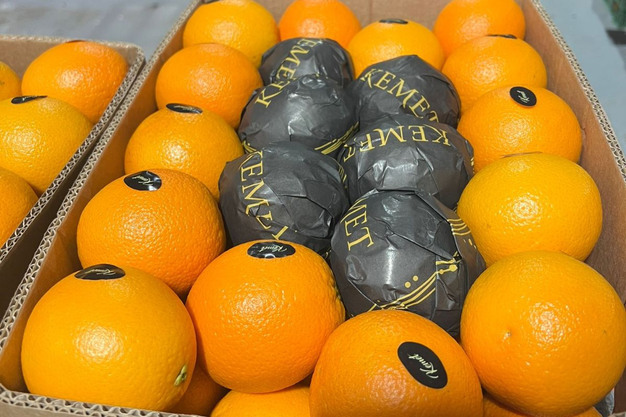
The Egyptian orange season got off to a disappointing start during the Navel orange export campaign, slowed down by extreme cold spells that impacted consumer behavior around the world, and fierce competition from China. The Valencia orange export season then started earlier than usual, restoring balance and promising a good end to the season.
Ali says, "All Egyptian exporters were expecting strong activity in early March, with the end of the Chinese New Year and the exhaustion of Navel orange stocks in China. We expected all the strong demand from the Far East to shift to Egyptian oranges, which promised an effective start to the Egyptian orange season after the multiple setbacks this season. In fact, the Valencia orange season was going quite well until Saturday, when the outbreak of war took us by surprise."
 © Premium Sourcing
The outbreak of war came at a time when exporters were anticipating strong demand from several markets such as Malaysia, Singapore, India, and China, which had previously been slowed down by Chinese competition. The situation is now very ambiguous, according to the exporter.
"No one, neither exporters nor shipping lines, has a clear vision at the moment. They are still testing the waters and translating risks into restrictions. Yet we know that the next period will be difficult, and shipping will be tough, Ali continues.
Return of the Red Sea crisis
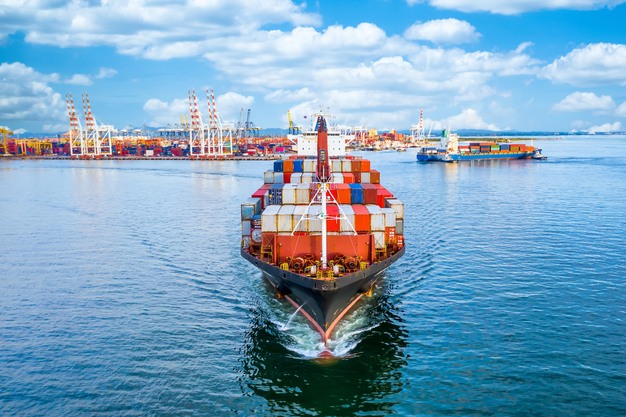
The war means an immediate return of the crisis in the Red Sea. Ali shares that he has already received advice on the suspension of cargo through the Suez Canal and Bab Al Mandab Strait. He adds, "Most shipping lines will avoid the Red Sea immediately. Those that maintain maritime rotations on this route have informed us of the implementation of risk insurance of $4,000 per container."
In terms of market restrictions, this means longer transit times to Asia, but also a complete halt to exports to East Africa. Ali shares, "A shipment we sent to Mombasa was stopped on the first day of the war."
 © Mr.siwabud Veerapaisarn | Dreamstime
In countries directly involved in the war, especially the Gulf countries, the situation is also difficult. "We export a lot of fresh and frozen produce to the Gulf countries, including strawberries, oranges, potatoes, and many other fruits and vegetables. The situation is now difficult for us as well as for importers and consumers. Here again, shipments are disrupted across the Red Sea and then by road through Saudi Arabia, as well as in the ports of the UAE, where our shipments are currently blocked. Air shipments are most impacted by a net halt. Once again, we are in the dark and awaiting communications from our shipping lines."
The crisis is also affecting air deliveries of oranges to small markets, which transit through Gulf air hubs. "We are talking here about markets such as the Maldives, Mauritius, and others, which are completely dependent on imports of oranges and other fresh produce," Ali said.
Oversupply in Europe?
Difficulties in reaching Asian markets, including Gulf countries, have in the past resulted in oversupply in Europe and falling prices. Ali comments, "We know that some buyers in Europe will seize the opportunity and impose low prices even before the oversupply occurs. I hope that Egyptian exporters will be smart and rational and treat the product with respect. We have a good product this season, good customers, and strong demand in many parts of the world, and there is more than just the European market."
 © Premium Sourcing
"We remain optimistic."
The distress is visible in the atmosphere, as Egyptian orange exporters have faced one surprise after another over the past two seasons. However, Ali is reassuring: "We remain optimistic because we know 100% that there is strong demand for Egyptian oranges in South and East Asia. We will have to adapt to logistical complications, but the demand is there and will be rewarding.
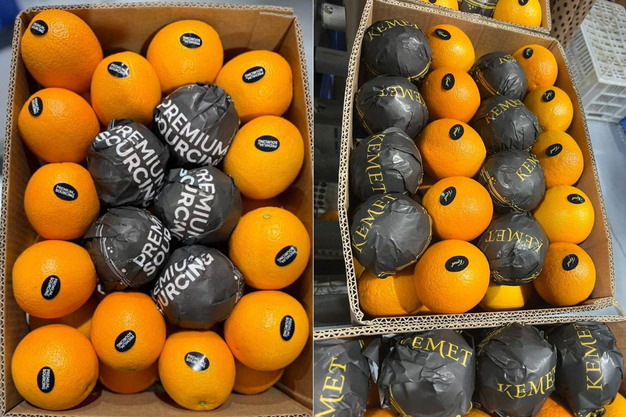
We are already accustomed to the crisis in the Red Sea. Shipping lines have succeeded in significantly reducing transit times for shipments via the Cape of Good Hope, cutting them from 90 to 60-70 days. In addition, some shipping companies will continue to sail through the Red Sea. For our part as exporters, we have the task of preparing our products carefully for long transit times through mindful sorting, packaging, and handling, which we managed to do at the height of the crisis in the Red Sea," Ali concludes.
For more information:
Mostafa Ali
Premium Sourcing
Tel: +20 10 07350313
Email: [email protected]