Table grapes in Spain are experiencing a major boom, driven by varietal innovation and stronger positioning as a practical, healthy food. Murcia-based companies El Ciruelo, Moyca, and Grupo Paloma highlight the crop's evolution, consumption trends, export growth, and outlook.
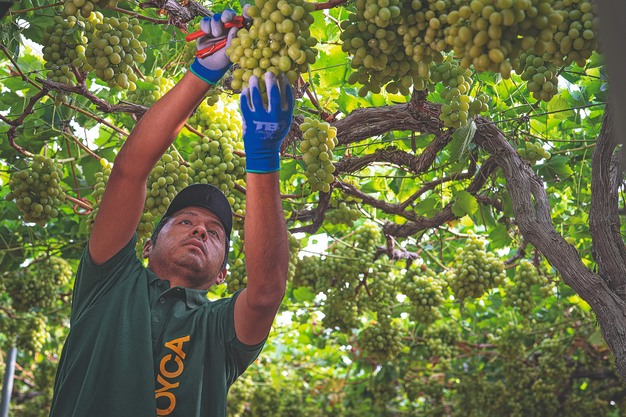 © Moyca
 © Moyca
According to Kantar data, table grape consumption in Spain has grown significantly, becoming one of the products with the greatest increase over the past year. Seasonality has been overcome thanks to new seedless varieties and retailers' commitment to year-round supply. Seedless grapes are increasingly established as a staple in the shopping basket.
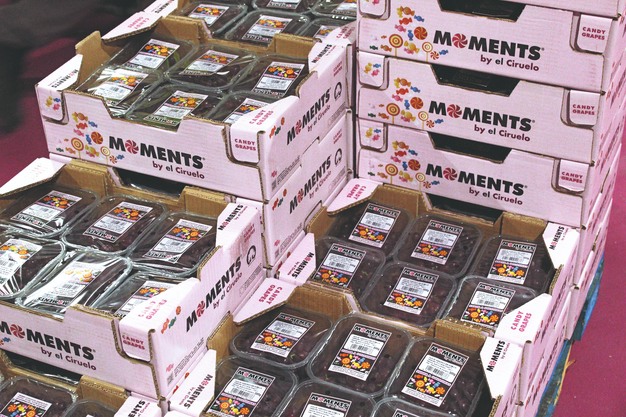
José Francisco Velasco, CEO of El Ciruelo, sees enormous potential: "They are one of the easiest fruits to consume, whether as a healthy snack for children, in salads or cooking, or simply as a dessert. For these reasons, their consumption has increased exponentially. Thanks to new, more consistent varieties and supermarkets' commitment, seedless grapes have become a commodity."
El Ciruelo cultivates around 2,500 hectares in Spain and expects to exceed 70,000 tons this year, weather permitting. The group also owns Labrunier in Brazil, with more than 1,000 hectares; combined production last year reached around 110,000 tons.
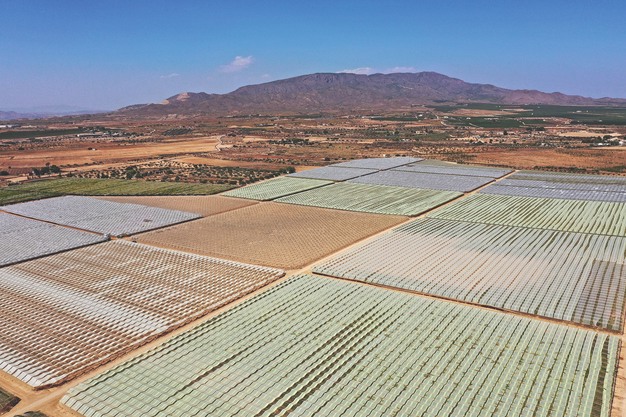 © El Ciruelo
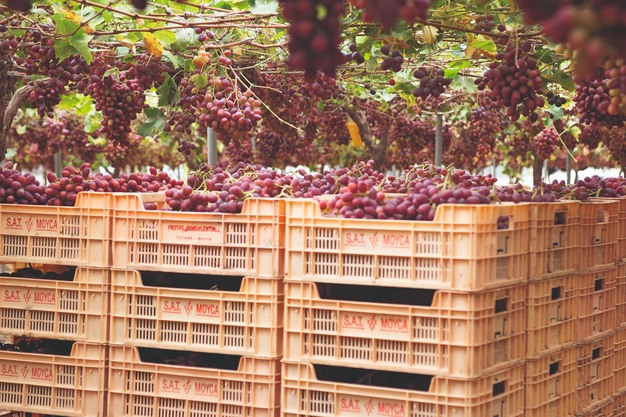
Antonio Domene, CEO of Moyca, confirms the trend: "Seedless grapes have changed consumption habits, being an easy and convenient fruit to eat. Promotional campaigns and innovation in varieties with distinct flavors help maintain this growth." Moyca produces around 80,000 tons annually and plans to add 100 hectares by 2025.
Strong growth potential in Europe
The UK, Germany, and the Netherlands remain key markets, while Eastern European countries such as Poland, Romania, and the Czech Republic show more recent but significant growth. "They are shifting from seeded varieties to valuing the convenience and quality of seedless grapes. There is strong growth potential here, especially in the premium segment," says Domene.
Exports to Asia have become more challenging. "China has increased its presence during our production window and begun exporting to other Asian countries, leading to greater competition," notes Velasco.
 © Moyca
Competition and strengths
Spain competes with Egypt and Morocco early in the season and with Greece later on. "We can't compete on labor costs, but we compete on service and quality," says Velasco, adding that Spain and Italy benefit from continuous varietal innovation and farm adaptation.
Domene stresses Spain's advantages: "Food safety, proximity, and consistent quality are highly valued by European customers. Competition is healthy and forces us to keep innovating." David Franco of Grupo Paloma adds that Europe continues to absorb growing volumes thanks to steady consumption growth and improved year-round quality.
 © El Ciruelo
"There's still even more room for improvement"
Domene believes potential has not yet been fully realized: "There's still room for improvement in pest resistance, productivity, post-harvest handling, flavor, and texture." New aromatic varieties with tropical nuances are already being introduced.
Velasco emphasizes the extension of Spain's production window from June to the end of November, including cultivation at altitudes up to 800 meters. Grupo Paloma plans prudent growth in volume and capacity. As Franco concludes, "Spain's market has taken a significant leap forward. Even so, there is still room for improvement, which suggests a bright future for seedless grapes."
For more information:
José Velasco
El Ciruelo S.L.
T: +34 968 630 645
[email protected]
www.elciruelo.com
Antonio Domene
Moyca
T: +34 968 42 38 38
www.moyca.org
David Franco
Grupo Paloma
T: +34 968590001
[email protected]
www.gpaloma.com