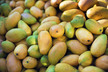
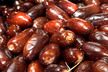
Ramadan is driving increased trade at the date market in Mina Zayed, Abu Dhabi, where boxes are stacked along the pavement, and shoppers are buying in bulk for the holy month. Vendors report that this is the busiest period of the year, with demand centred on breaking the fast and gift-giving.
"Ramadan season is a very, very busy time," says Anas of Ali Ashoor Date Shop. "One person took 1,000 cartons."
Local khalas dates are reported as the most popular variety during Ramadan and are commonly presented as gifts by Emiratis. Medjool and ajwa, mainly sourced from Saudi Arabia, are preferred by many expats and tourists.
Singaporean shopper Aliyah said: "We give the ajwa dates because that is the favourite date of Rasool Allah, our prophet. So when you give gifts in Ramadan, especially dates, the Muslims look for ajwa. We give those to our friends as well."
In Islam, dates are traditionally used to break the fast and are mentioned multiple times in the Quran. This practice contributes to increased consumption across the UAE and the wider Arab world during Ramadan.
Bulk purchasing is common among both consumers and food service operators. Syrian restaurateur Hassan Hamsho said: "I have eight restaurants, so I take about 1,000 kilos [during Ramadan]." Restaurants, hotels, and mosques distribute small packages of dates, typically khalas, for iftar.
The date palm remains a core agricultural crop in the UAE, with an estimated 40 million trees across more than 150 varieties. Archaeological findings on Delma Island indicate date cultivation in the region for more than 7,000 years.
Dr. Jonathan Flowers of NYU Abu Dhabi has researched date genetics for 12 years. "Dates were a core component, a part of the rich history of the region," he says, noting their role as "a source of sustenance, something that fuelled the local economy and facilitated long-distance travel."
He describes khalas as widely available and recognisable by taste. "Khalas is the number one cultivar or variety. Every single market, every single grocery store will have khalas. People just like the taste of it."
Dr. Flowers notes that current varieties are propagated from offshoots rather than seed, maintaining established cultivars over centuries. "These varieties are really gifts from our ancestors that have been preserved for long periods of time," he says.
Source: The National