Scientists from The University of Queensland have identified the genomic region linked to resistance against Fusarium wilt Sub Tropical Race 4 in a wild banana subspecies. The work marks a step forward for banana breeding programs aimed at protecting Cavendish production.
Fusarium wilt, also known as Panama disease, is a soil-borne pathogen that affects Cavendish bananas globally. Dr. Andrew Chen said identifying natural resistance from wild bananas offers a long-term approach to managing the disease, which infects soil and can impact future crops.
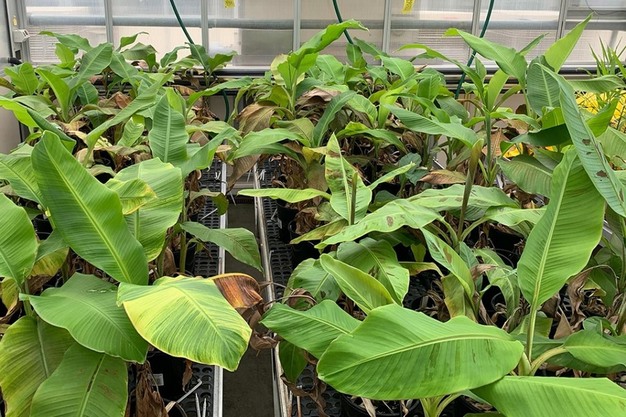
The research team located the source of resistance in Calcutta 4, a fertile wild diploid banana. By crossing Calcutta 4 with susceptible diploid bananas and exposing progeny to STR4, researchers compared DNA from resistant and susceptible plants.
 © The University of Queensland
"We mapped STR4 resistance to chromosome 5 in Calcutta 4," Dr. Chen said, describing it as the first genetic dissection of Race 4 resistance from this wild subspecies.
The five-year project required each generation of banana crosses to be grown for at least 12 months before disease screening and further breeding. The team applied forward genetics, population development, disease screening, genome sequencing, and bulked segregant analysis.
Although Calcutta 4 contains valuable resistance traits, it is not suitable for commercial cultivation due to fruit quality. "While Calcutta 4 provides crucial genetic resistance, it isn't suitable as a commercial cultivar because it doesn't produce fruit that is good to eat," Dr. Chen said.
The next stage involves developing molecular markers to allow breeders to track the resistance trait in seedlings before symptoms appear. "This will speed up selection, reduce costs, and hopefully ultimately lead to a banana that is good to eat, easy to farm, and naturally protected from Fusarium wilt through its genetics," he said.
STR4 affects bananas in subtropical regions and is a genetic variant of Tropical Race 4, which is present in Australia.
The research was supported by Hort Innovation through banana industry levy funds and contributions from the Australian Government. Results are expected to inform future breeding investments and disease management strategies for the sector.
For more information:
The University of Queensland
Tel: +61 (0) 429 056 139
Email: [email protected]
www.news.uq.edu.au