The 2025/26 Peruvian onion season is now almost in its final stretch with stable volumes, although marked by strong downward pressure on international prices, reports Mario Chirinos, president of the board of directors of Agroexportadora Virgen del Carmen SAC, a producer-exporter company that delivers 60% of its volume to the United States and around 30% to Spain.
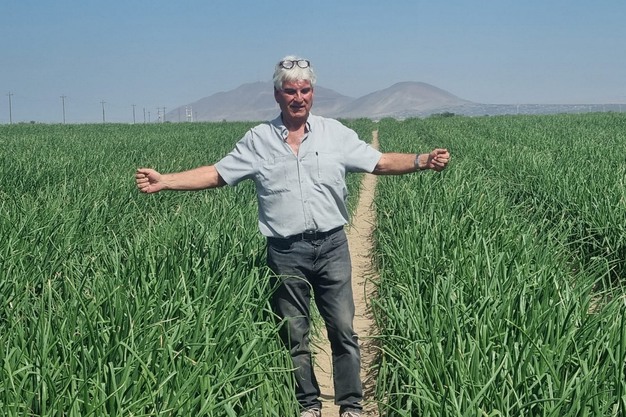 © Agroexportadora Virgen del Carmen
The campaign runs from August to February and, according to Chirinos, it started with sanitary issues. "There were many health problems at the beginning of the season due to the weather," he says. However, the situation improved as the harvest progressed and "eventually, the season is coming to a close with fairly normal results."
In terms of volume, the company will export around 15,000 tons in the current season, a similar figure to the previous one. "I think volumes have remained stable," says Chirinos with regard to national production.
 © Agroexportadora Virgen del Carmen
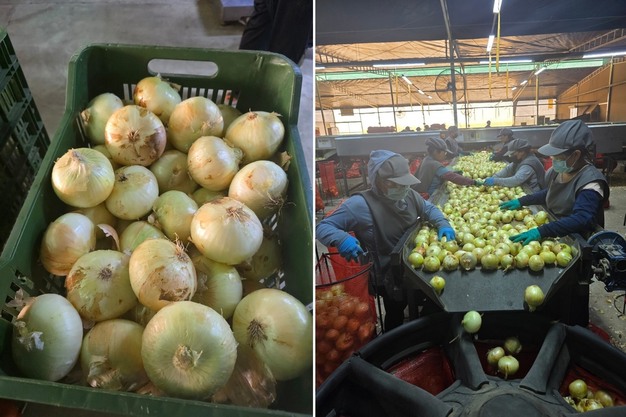
Sorting by size is one of the essentials of the business. Larger sizes are mainly intended for the North American market, while small sizes go to Latin America and Europe, especially Spain.
Regarding varieties, they mainly work with the Granex and Redonda. The Granex is harvested until December, and then the Redonda follows until February, when the season ends. These go to the soft yellow onion market. "We should say that they are not sweet, but mild," says Chirinos, highlighting that they work with a fresh product that is well accepted at its destination.
 © Agroexportadora Virgen del Carmen
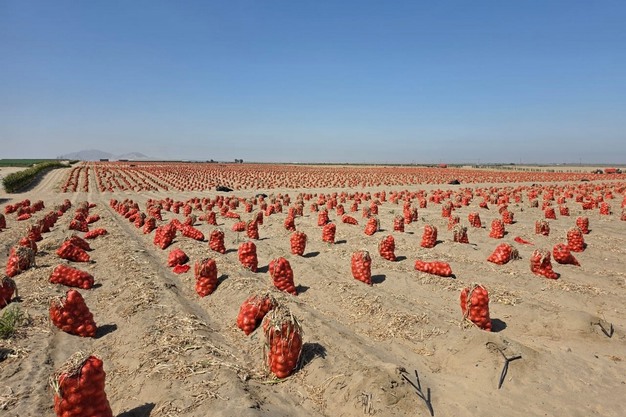
The main opportunity for Peru lies in its status as an off-season supplier. "We are in the Southern Hemisphere and work in the off-season," says Chirinos. They enter the market as soon as local production in the Northern Hemisphere comes to an end.
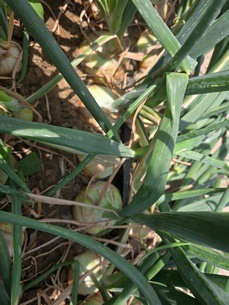 © Agroexportadora Virgen del Carmen In the United States, they do not compete directly with the summer harvest, but enter the market once that supply has finished. African production also starts to arrive at this time of the year, which results in greater competitive pressure.
Market behavior also depends on refrigerated stocks in the destination countries. "Many of them keep productions in cold storage, and our shipments are consequently delayed," he says.
The season has been marked by low prices. "A lot of onion has been produced in the world," says Chirinos, estimating a drop of approximately 10 cents per unit compared to the previous season.
From his perspective, the business is structurally limited. "Onions are not an elastic product. Consumption stays at the same level all the time, so the price going down doesn't lead to higher consumption," he says.
 For more information:
Mario Chirinos
Agroexportadora Virgen del Carmen SAC
Peru
Tel.: +51 981 095 299
[email protected]
www.agrodelcarmen.com