German wholesale markets experienced a turbulent year marked by closures, relocations, and ongoing uncertainty about the future of key trading hubs. After years of legal disputes, the fresh produce center in Düsseldorf closed on December 31, 2024, followed by the closure of the Cologne wholesale market one year later. Meanwhile, the situation in Munich has become increasingly critical after investor Büschl withdrew from renovation plans for the aging Sendling site, leaving its future unresolved.
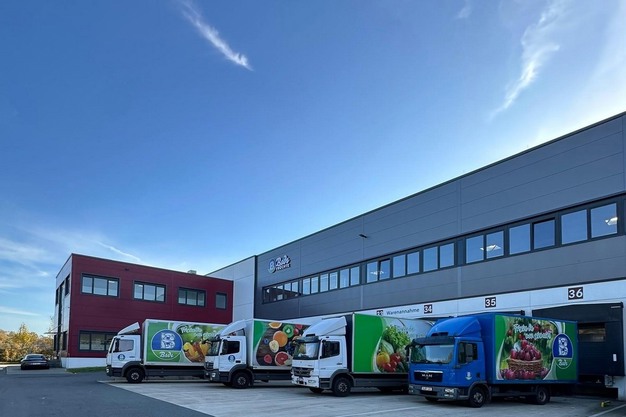 © Bidi GmbH
A view of Bidi GmbH's new headquarters in Hilden
Traders in Düsseldorf and Cologne continue the tradition
Despite the closures in North Rhine-Westphalia, wholesale trade in the region is continuing in new locations. In summer 2024, Großmarkthallen Düsseldorf eG relocated to Hilden, south of the city. Although some traders only decided on the new CityDock site at the last minute, most have now settled in well, benefiting from improved logistics and access to new distribution areas. A similar development occurred in Cologne, where around a dozen traders established a new hub in Gremberghoven under the name ABA Frische Centrum GmbH. The new facility offers modern infrastructure and easier truck loading and unloading. "We find an optimal infrastructure here so that trucks can be loaded and unloaded practically and easily. That makes our work much easier," says Ahmed Bouqlata of Kräuter Express. Co-initiator Nevzat Taskiran adds that the traders are now focused on preserving the wholesale market tradition in the new location.
 © Hugo Huijbers | FreshPlaza.com
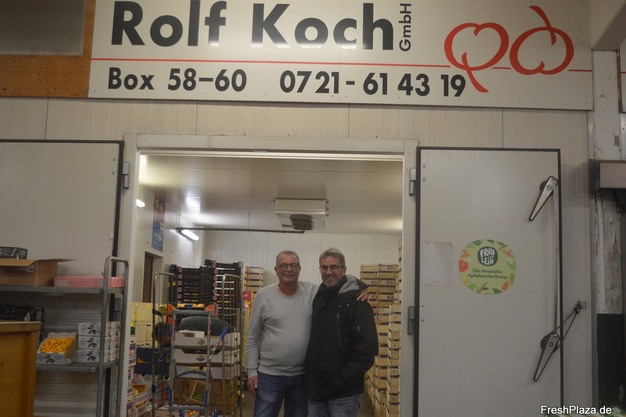
Jürgen Weiler, Managing Director of Rolf Koch GmbH, and Axel Pallmer from the Karlsruge Market Office
Not all companies chose to move to the new centers. Some traders in the Rhine-Ruhr region opted for independent sites, including Düsseldorf-based Bidi GmbH, which relocated nearby to pursue structured growth in a more sustainable building. Others, such as özTürkuaz Handels GmbH, settled in Gelsenkirchen due to lower rents and better growth prospects. In Cologne, the traditional company Norbert Heep decided to continue operations at the flower wholesale market in Riehl instead of joining the new fresh produce center.
The future of the Munich wholesale market remains uncertain
Traders rejected previous redevelopment plans, and although some leases run until 2037, the attractive Sendling location is also of interest for housing or office development. Günther Warchola, chairman of the Bavarian Fruit Association, stresses the importance of dialogue with authorities, noting that the market is vital for supply security, hundreds of businesses, and thousands of jobs in the city.
 © Hugo Huijbers | FreshPlaza.com
While large markets face structural challenges, smaller wholesale markets appear to be gaining momentum. Facilities in Duisburg and Karlsruhe report strong demand and high occupancy rates. "We are currently operating at full capacity and have more inquiries than available space," says Duisburg Kontor market manager Udo Jesel. Local political support and the growing appreciation of short supply chains since the pandemic are seen as key factors supporting their stability and future prospects.