Australia's almond industry is heading into the new season with a larger crop on the trees, strong production fundamentals, and some familiar concerns around currency and water.
Tim Jackson, chief executive officer of the Almond Board of Australia, says the industry's latest preseason estimate reflects both improved growing conditions and the maturation of recent plantings.
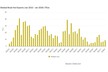
"With our new season starting on 1 March, we always do a preseason estimate," Jackson says. "That's released this month, and it's 166,891 tonnes." The estimate is around 7% higher than last year's crop and more than 3,000 tonnes above the previous record.

Jackson points to a combination of agronomic and structural factors behind the increase. "There are a number of reasons," he says. "There were far more favourable growing conditions; we had a perfect pollination season, and some of the newer plantings have come into full production." Those newer orchards include the roughly 20,000 hectares planted during the 2017–19 expansion phase.
Price signals have also been relatively supportive. Jackson says almond prices last season were the strongest seen in several years. "They've held up relatively well," he says. However, the bigger concern heading into harvest is not price, but currency.
"As we go into the new season, the concern is the exchange rate," Jackson says. "We do all our export programs in US dollars, and the Aussie dollar has strengthened three cents in the past seven days." That move, he says, directly affects grower returns. "If that remains at that level, that'll have a significant impact on grower returns. Not prices, but grower returns." Even if market prices remain the same, the translation back into Australian dollars matters.
The harvest is about to begin, with the first machines already moving into orchards. "Within the next week or so, I'd say," Jackson says. "Next one to two weeks, harvest will be in full swing." Weather conditions leading into harvest have been dry, which suits almond growers operationally. "We're in the midst of a big dry. We've had no significant rain for a long time," he says. "So perfect harvesting conditions."
That dryness does come with trade-offs. "Not good for storage in the rivers and water prices," Jackson says, "but really good for harvests." Hot conditions in recent weeks are also shaping how the season will play out. "The hot weather we've had in the last couple of weeks will condense the varieties and the harvest time," he says, with different varieties ripening closer together rather than being spread out.
Despite the positives, Jackson remains cautious rather than confident. "Hopeful is the word I'd use," he says, particularly around rainfall during harvest. "Nothing changes the weather like starting up a harvester. Rain causes all sorts of issues, so we always have one eye on the forecast at this time of year."
Under normal conditions, harvesting wraps up by April. "If it's dry, they'll be through harvest by April," he says. "If it's wet, it normally takes longer."
For more information:
Tim Jackson
Almond Board of Australia
Tel: +61 438 871 312
Email: [email protected]
australianalmonds.com.au